Painting a canvas of revolution and resilience in Sudan
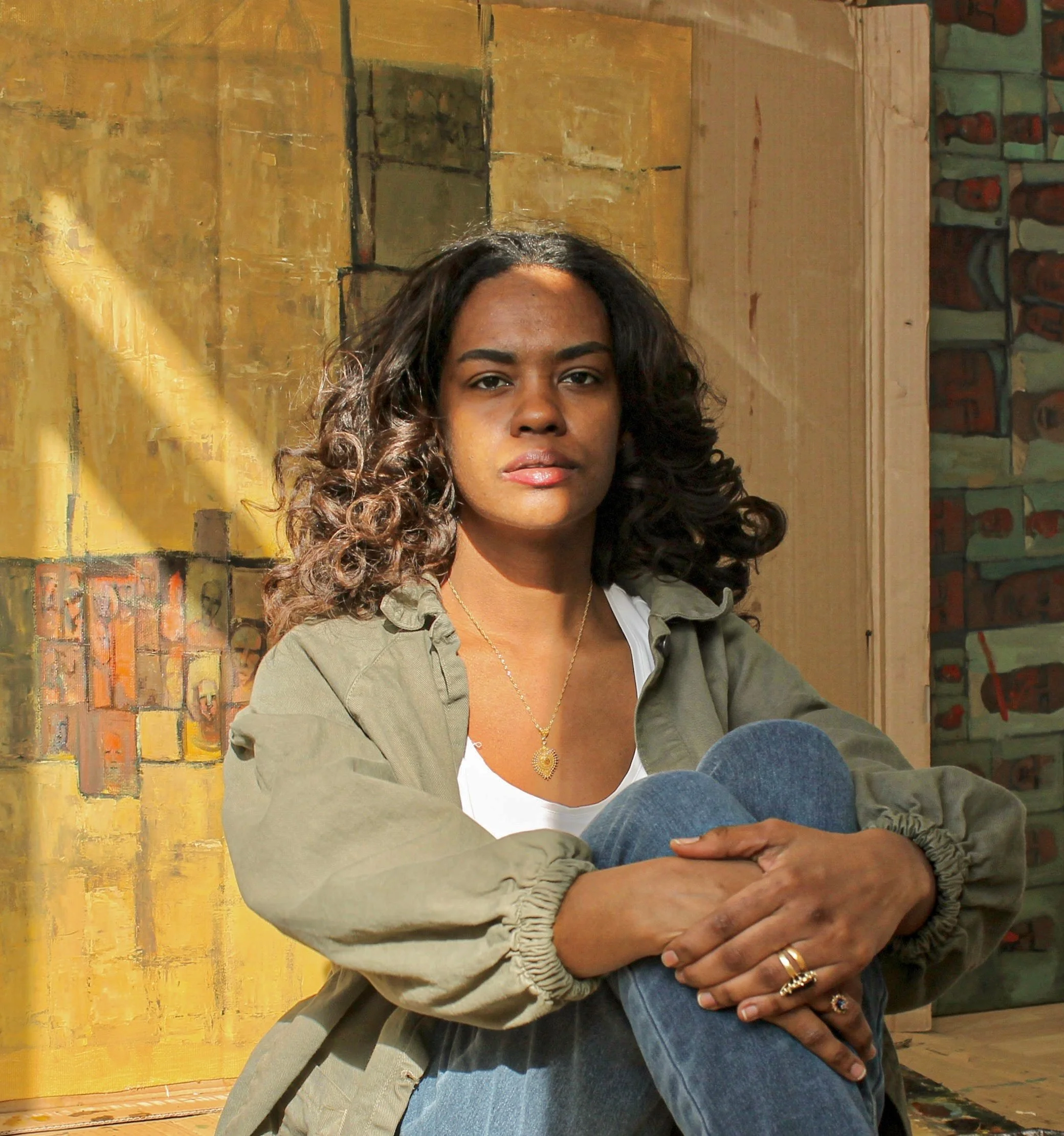

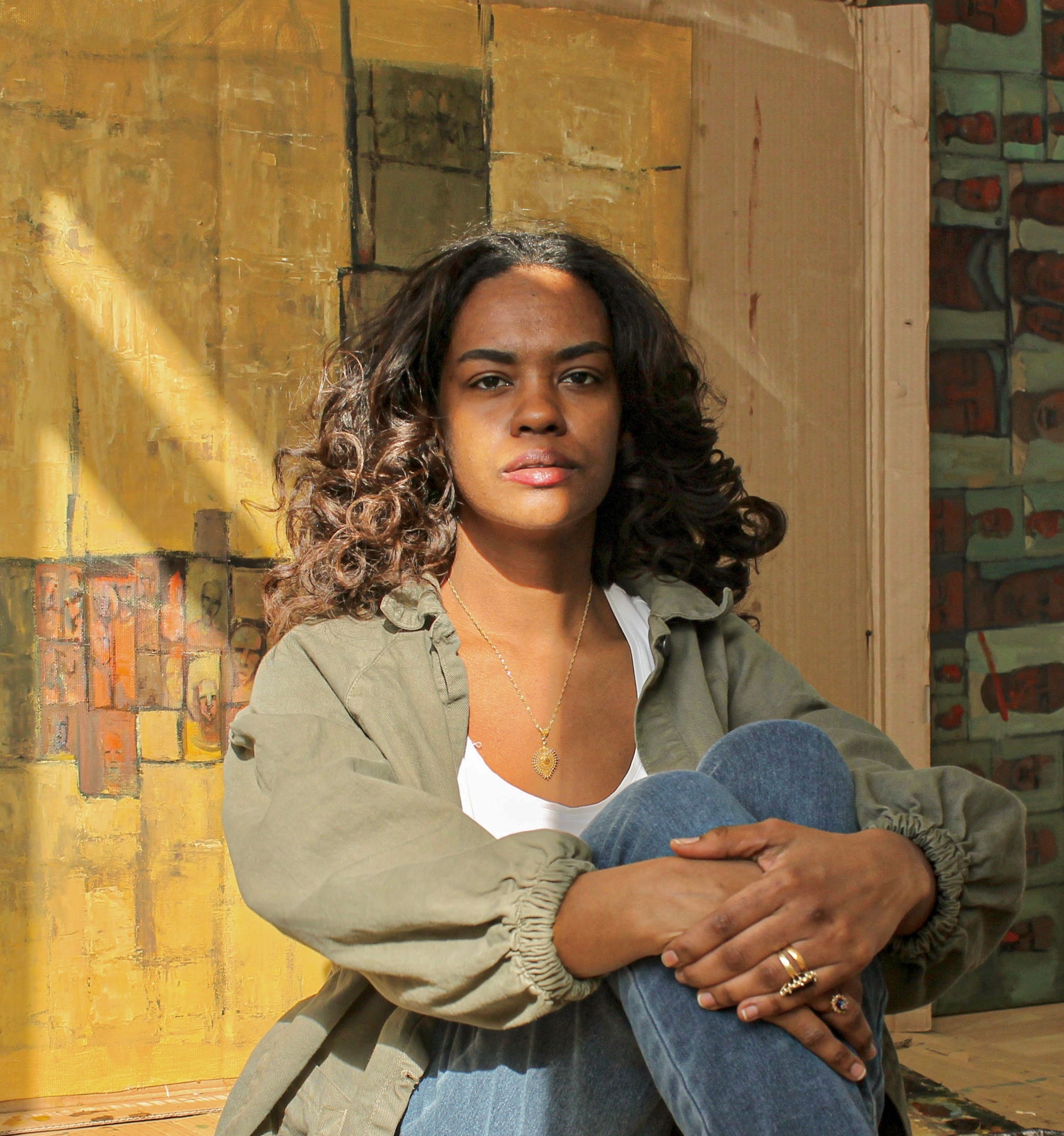
In the dusty streets of Khartoum, amid unfinished buildings and a tumultuous political climate, Dahlia Baasher found her voice in the earthy tones of her homeland. Originally a business school graduate who ventured into graphic design, Dahlia's true calling in art emerged from a deep-seated desire to share the stories of Sudan. Today, as an immigrant living in Canada, her works are poignant narratives of resilience and identity, mapping both personal and collective histories to show a world that must not be forgotten.
Dahlia, your journey from business school to becoming a celebrated artist is as fascinating as your paintings. How did this journey begin?
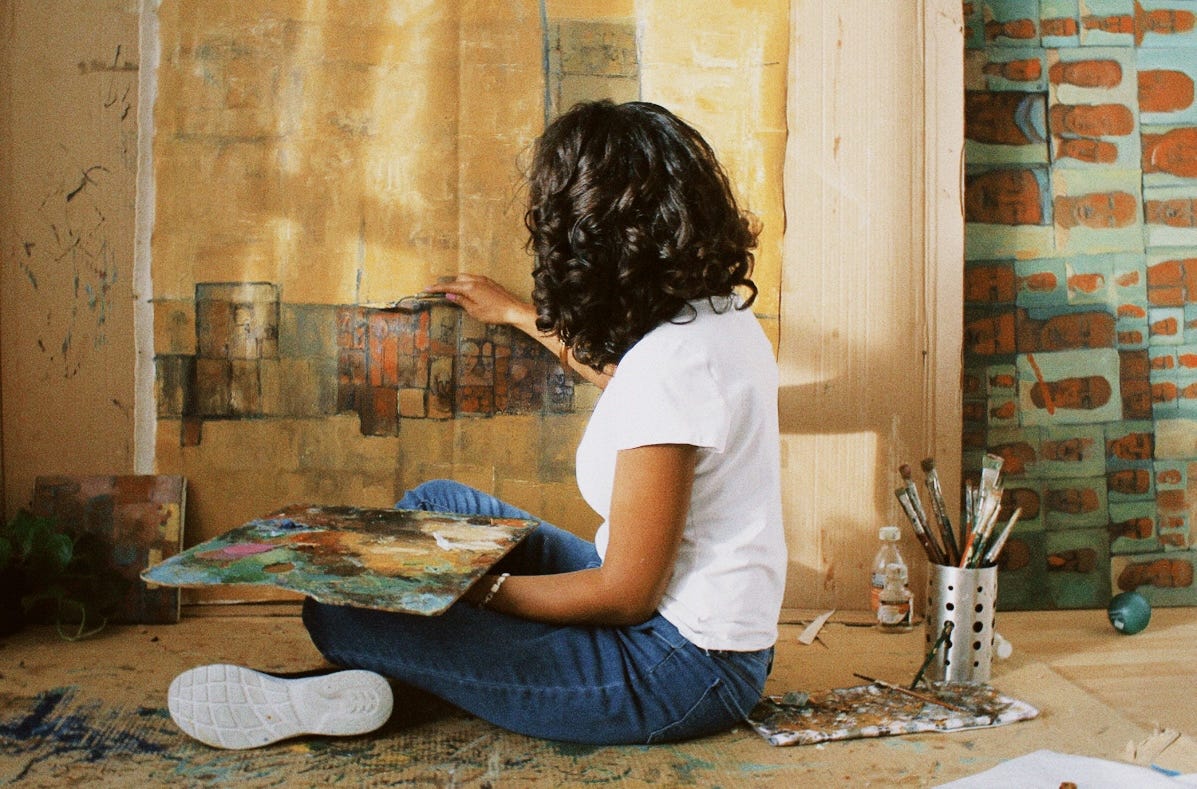
I graduated from business school, but I always had a passion for art. After I graduated, I worked as a graphic designer for an organization for children with disabilities. This role sparked my interest in art as a form of therapy. In 2017, I started taking courses in painting and mixed media.
I started to exhibit my work in different galleries in Khartoum. I remember my first exhibition was for the Women in Art in Sudan. I was the youngest female artist [in that exhibit] and it was difficult for self-taught artists to get in because you have to have a degree in art to exhibit in major places in Sudan.
[Since] I was able to exhibit with big artists in Sudan, it made it easier to open my own space. I started selling my pieces at different galleries, selling it online, and then eventually opened up my own space in 2019.

What inspired you to open your studio and open it up to other artists in Khartoum?
I opened my studio as a shared space for female artists to come and work. Before the revolution in Sudan, it was difficult for artists to practice art. Art was not forbidden pre-revolution, but it was limited, even for male artists. After the revolution and the stepping down of Al-Bashir, we started painting murals around Khartoum. I was teaching art at Khartoum International Community School and the art department occasionally donated materials for other artists to be able to paint. Sometimes, I’d even take my students to paint and do murals. It was a very good time for art and many galleries opened in Khartoum during this time.
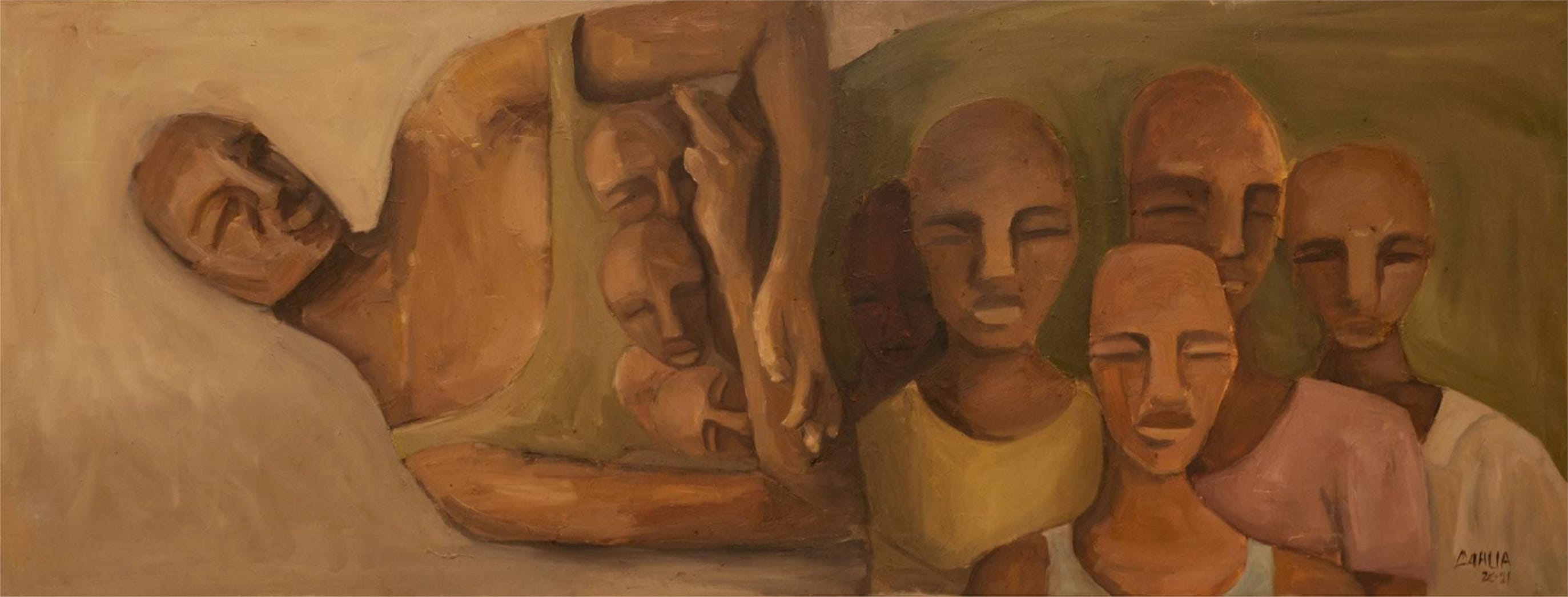
That must have been an incredible time to be creating art and hosting a space for other artists. Were there any memorable moments or pieces of work created then?
During the [2019] revolution, my friend picked me up to go an event near my house. While we were celebrating the stepping down of the President, they started shooting at us from an unfinished building that was owned by the past President. In seconds we went from celebrating and dancing to being in survival mode. Everyone was laying down on the ground and trying to keep each other alive. It was crazy.
So I did this painting, it’s now stuck in Sudan and I hope one day I can go back and get it. I got so many offers to sell this but it felt like something that needed be in a museum or something. It was a very significant time in Sudan, but now I’m not sure even sure if I’ll be able to see it again. It’s titled April 11th.

That is a such a powerful story and piece. Unfortunately, the tide shifted once in Sudan with another war breaking out in 2023. How has this impacted you and your family?
Last April, the Rapid Support Forces [RSF], the Sudanese Army [of the prior government] started shooting civilians. We all had to leave. I was working in Egypt at the time, but when the war went off everyone had to flee and leave their homes. My brothers, my family, they all were there during that time, but they have all since left. We are living in Canada now.
Us Sudanese are very resilient. There were always major events happening in Sudan growing up. We never get used to the shooting, but we have learned to live with it. When the war happened, we thought it would end in a few days. We didn’t think it would still be going, but we learn to cope with what’s happening.
So many artists moved to Egypt, since I was already there I was able to donate materials or find exhibitions to support them. We are constantly trying to help each other and find ways to do better.
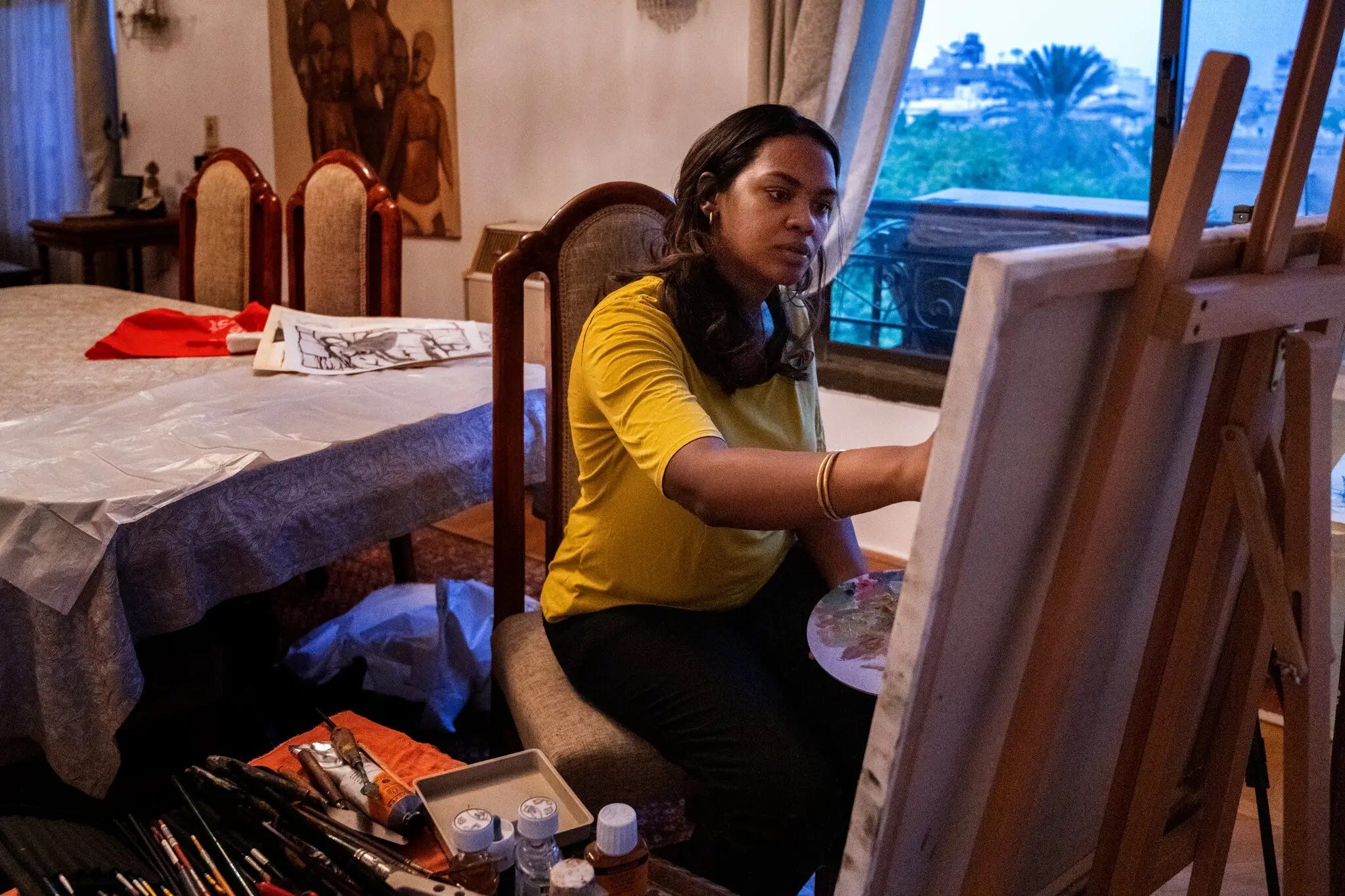
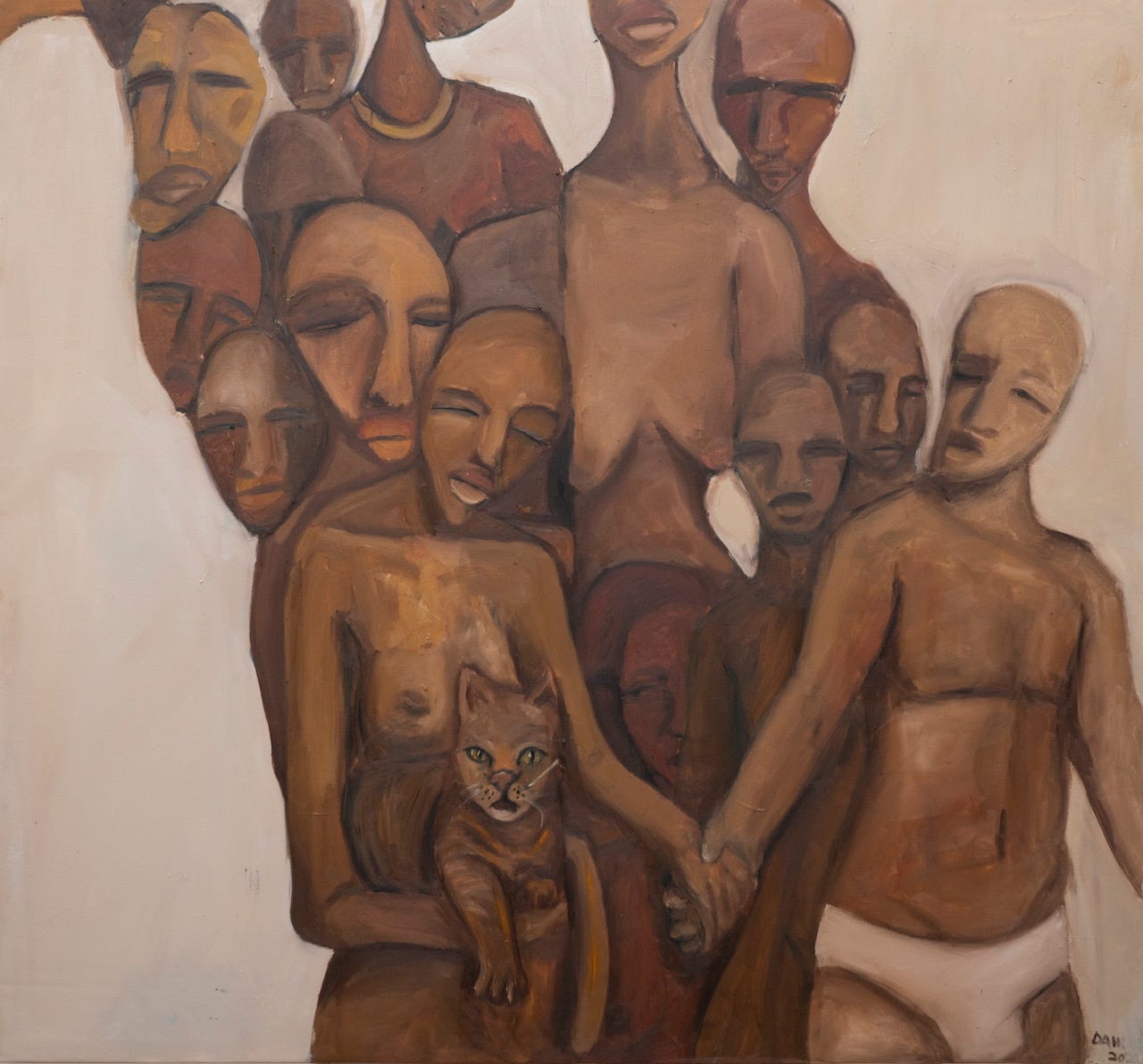
How has your practice been impacted since the war and move to Canada?
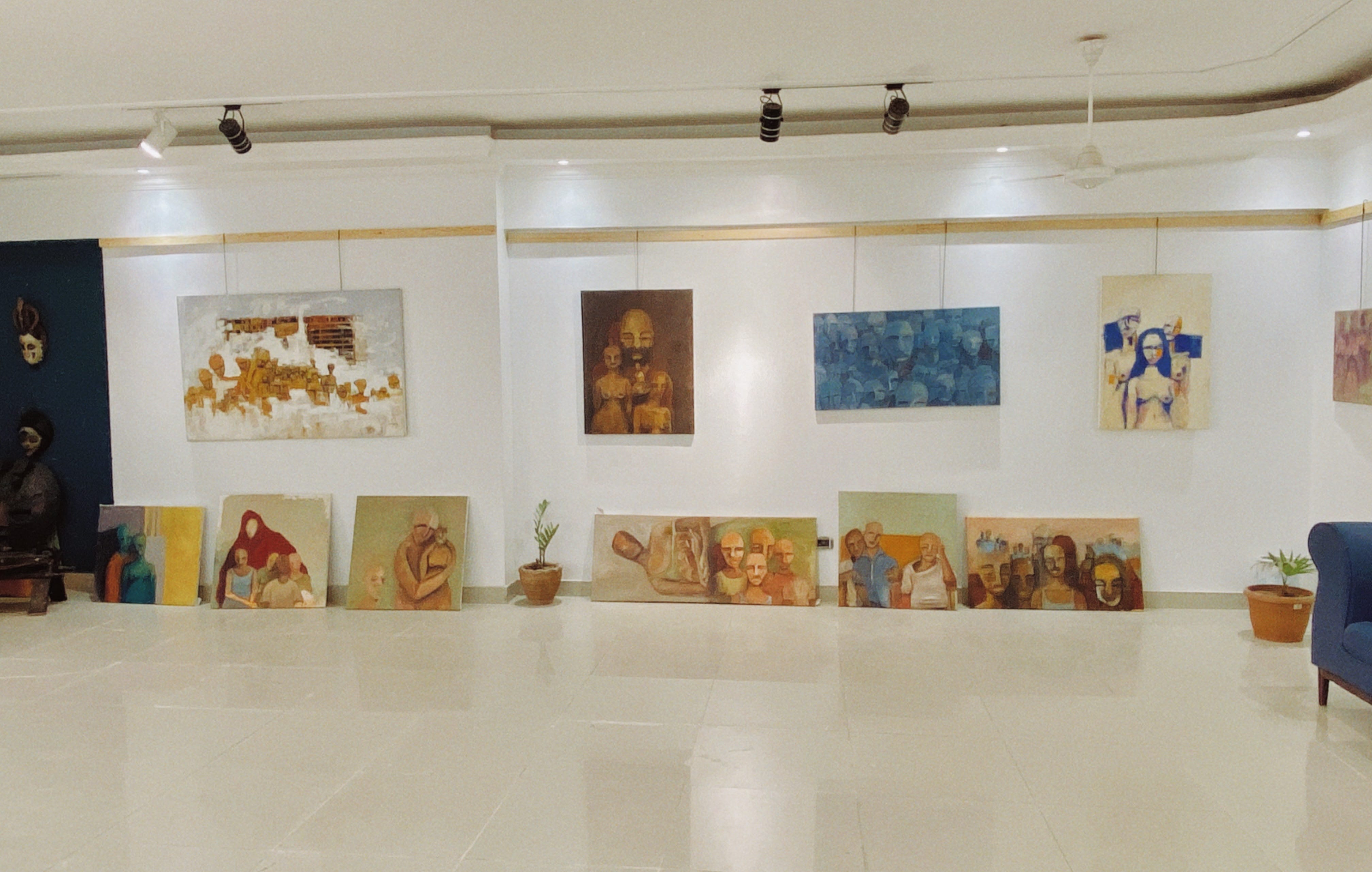
My art was always focused on the cultural and social aspect of Sudanese life. Now it’s more focused on documenting and storytelling, especially about displacement. Most of my pieces are about how people got displaced and how people lost their homes and families. We basically lost everything.
When people see my art, I want them to experience the stories of Sudanese people. There is a lot to tell, but we have a simple mentality and don’t always see the necessity to tell our stories. But it’s been crazy in Sudan. There’s a lot to tell. There’s a lot to see.

I get that. Sometimes when you’re in the middle of something, you think, “What’s there to explain? This is just what life looks like”. I think it comes from the resiliency you were talking about before which toughens you up to the experience. But it is important that people know what’s happening so we can understand and appreciate all that you have to offer. What are you hoping for next?
At this point? Just peace. Just to be able to go back to our homes.
Thank you for sharing your story and art with us, Dahlia. If you want to purchase her art, check out her page on Saatchi, and follow her on Instagram.