Not your mom's sari
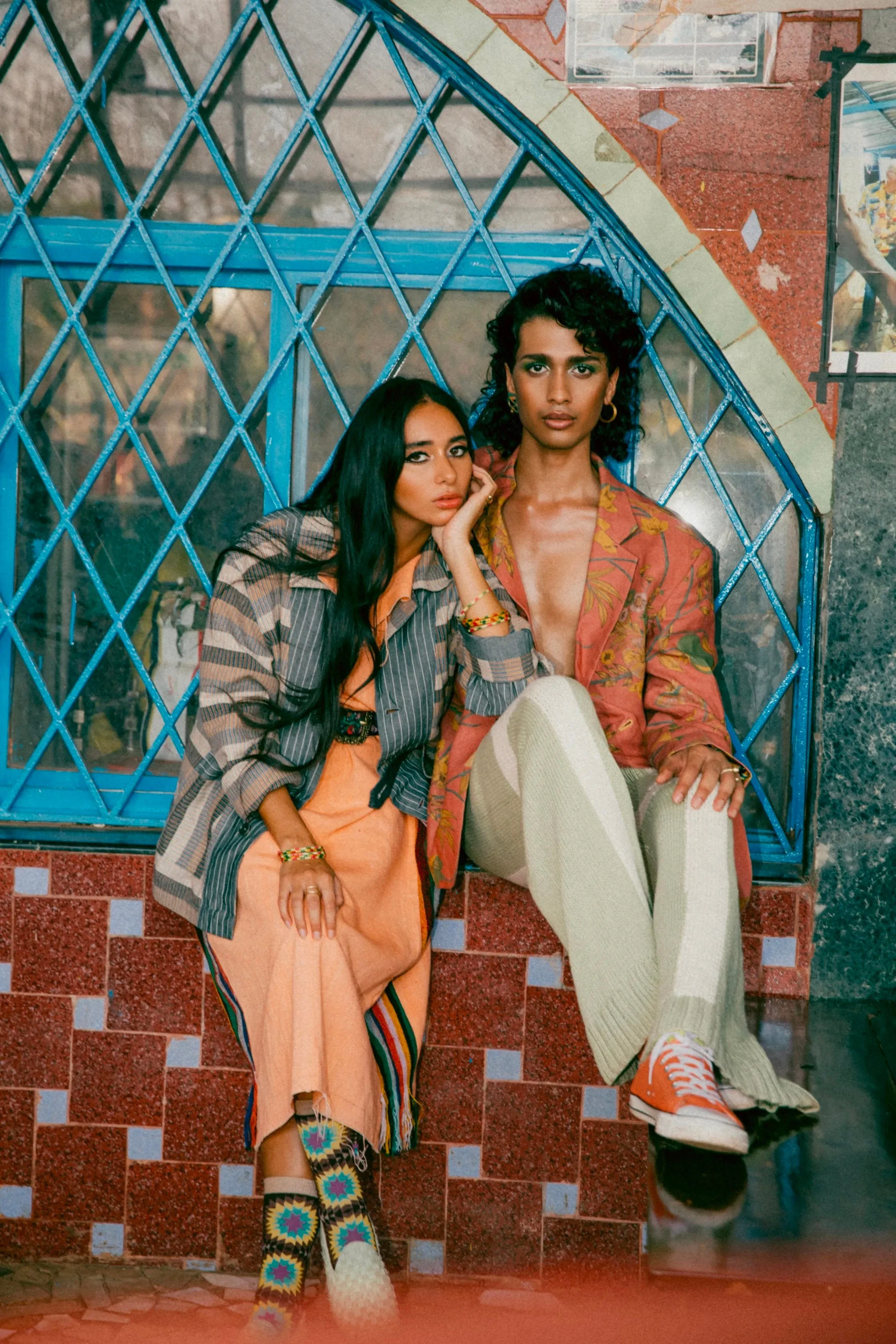
When you think of Indian fashion, you think of traditional clothes, like a sari with a lot of gold, diamonds, and bling. Kanika Karvinkop of No Borders, Sheena Sood of abacaxi, and Mriga Kripadiya and Amrit Kumar of NorBlack NorWhite celebrate Indian craftsmanship, while pushing their boundaries to reimagine designs for a modern world.
No Borders
Modern Indian fashion with strong, gender neutral silhouettes rooted in culture, is the world that Kanika Karvinkop has helped usher in. Karvinkop launched her brick and mortar store, No Borders in 2017 in South Mumbai to promote under-represented designers and vintage fashion. Post pandemic, she and her co-founder, Seema Hari, found an urgent need to expand access and launched a marketplace connecting high quality local designers on a global platform.
Karvinkop started her career in styling, working first at Grazia India and then freelancing at i-D, Nylon, Wonderland, and Refinery29. The idea she pitched to Refinery29 in 2016 is one of my personal favorites. Shot in Pushkar, Rajasthan, Karvinkop pushed the envelope with modernizing Indian classics - sari with a shirt or a dress styled over a dhoti. Six years later this may feel less avant-garde, but Karvinkop laid the foundation for the movement.
The new No Borders has expanded products to include fashion, art, home decor, beauty, and books. Each designer featured was hand selected for their craft, use of raw materials, and sustainability. No Borders offers the best of India’s artisan with incredible stories of the creators and workmanship. The designers include a small town in the south, Navalgund, that makes geometric dhurri rugs to Amesh Wijesekera, a Sri Lankan clothing designer creating unisex clothing inspired by his mom’s saris.
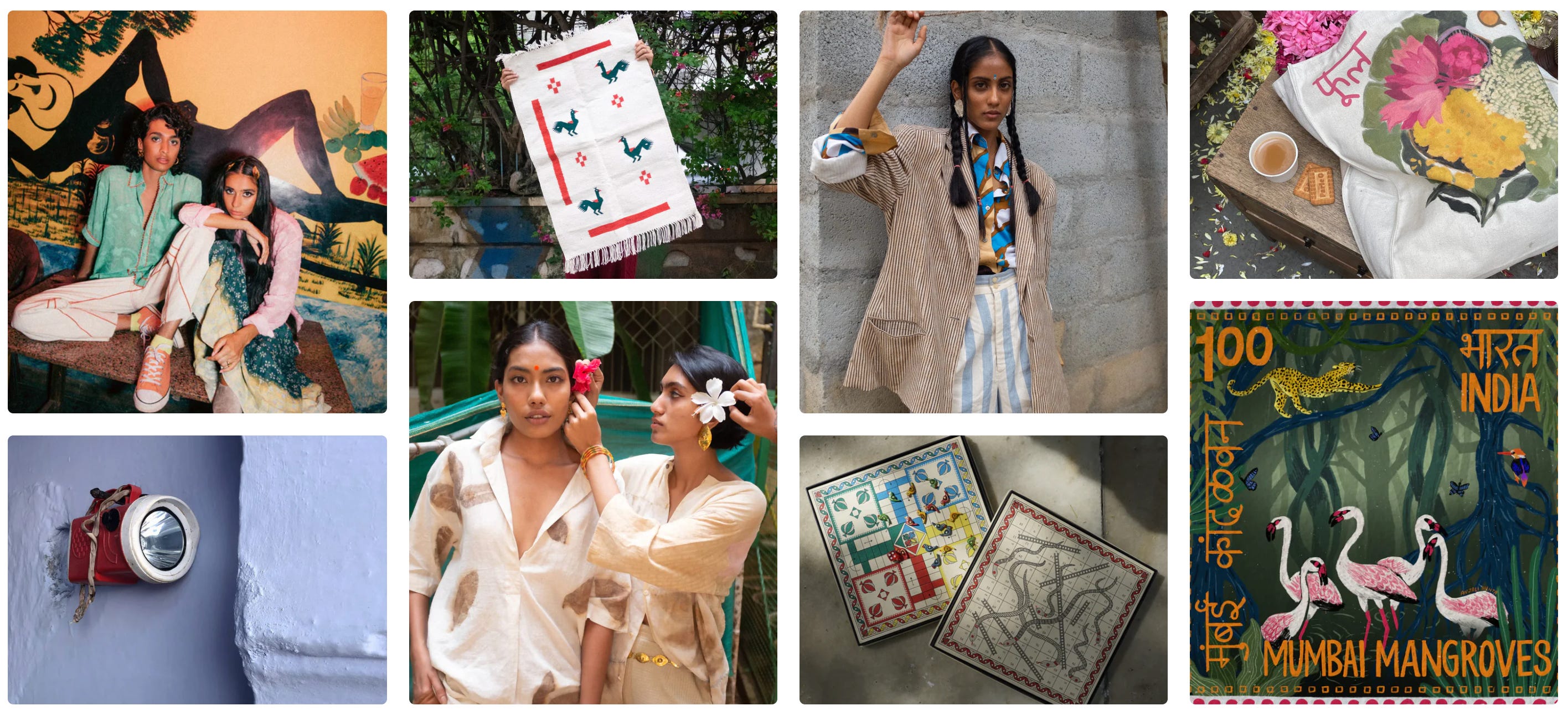
No Borders is here to build the bridge between local designers and consumers who care about the craft and sustainability. While the idea isn’t new, their approach is. As Karvinkop shared with Vogue, “I am most excited about disrupting these eurocentric industries by slowly shifting the power back to the hands of the people across the world”.
NorBlack NorWhite
NorBlack NorWhite (NBNW) is named after the gray area, an explicit call out to the space between Eastern and Western cultures that the founders, Mriga Kripadiya and Amrit Kumar, occupy. NBNW was founded in 2010 when Kripadiya and Kumar left Toronto for Bombay to explore their Indian roots. This led them to Kutch, Gujarat where they learned about a tie-dye technique called bandhani, which they reimagined in bright neon colorways and modern silhouettes. “We love the generations of learning, skill, and heritage that goes into traditional crafts [in India], and we want to pay homage to them, especially since they’re starting to disappear,” Kapadiya shared in an interview with Nuvo. “At the same time, we grew up on ’90s R&B music, old-school hip-hop, and love the aesthetic from that time.”
NBNW’s mash up traditional Indian craft with modern streetwear style quickly rose to popularity locally and later globally, featured in Major Lazer’s “Lean On” and Chronixx’s “Majesty”. Over the past decade, NBNW continues to be a champion for traditional textiles and craftsmanship while expanding their platform. They have launched branded collaborations, like a zine for Fila India or an apron for Diaspora Co. They have amplified the voices of women and BIPOC artists with projects like the Moon Sari for the Victoria and Albert modern fabrics of India collection or supporting domestic abuse victims in Delhi. Through it all, Kripadiya and Kumar have stayed true in celebrating their identity, culture, and community.
abacaxi
Sheena Sood the founder of abacaxi, is a textile designer and artist who says creating custom fabrics are just part of her process. As is ensuring that her line is always size inclusive, sustainable, and that every piece can be used in multiple ways. Sood highlights the sari as her inspiration - a garment that can be worn in multiple ways by people of all sizes.
Sood launched abacaxi back in 2013 from her Brooklyn apartment with a set of mirrored fabric she had picked up on a trip to Rajasthan. She continued to work on abacaxi as a side project until 2020 when she planned to show at Paris Fashion Week. The pandemic had other plans though, so while she waited for the world to reopen, she created masks in her handmade fabrics and prints that helped put her brand on the map.
Earlier this year Sood launched her 2022 capsule collection, “Stingray”, inspired by a snorkeling adventure in Costa Rica. Her vibrant colors, patterns, and silhouettes mix nineties and early aughts styles with traditional Indian craft, like mirror work and beading. It is rare to see Indian inspired clothing seamlessly fit into everyday wear, but Sood brings a fresh perspective to make it easy, fun, and effortlessly cool.