Art Deco in India
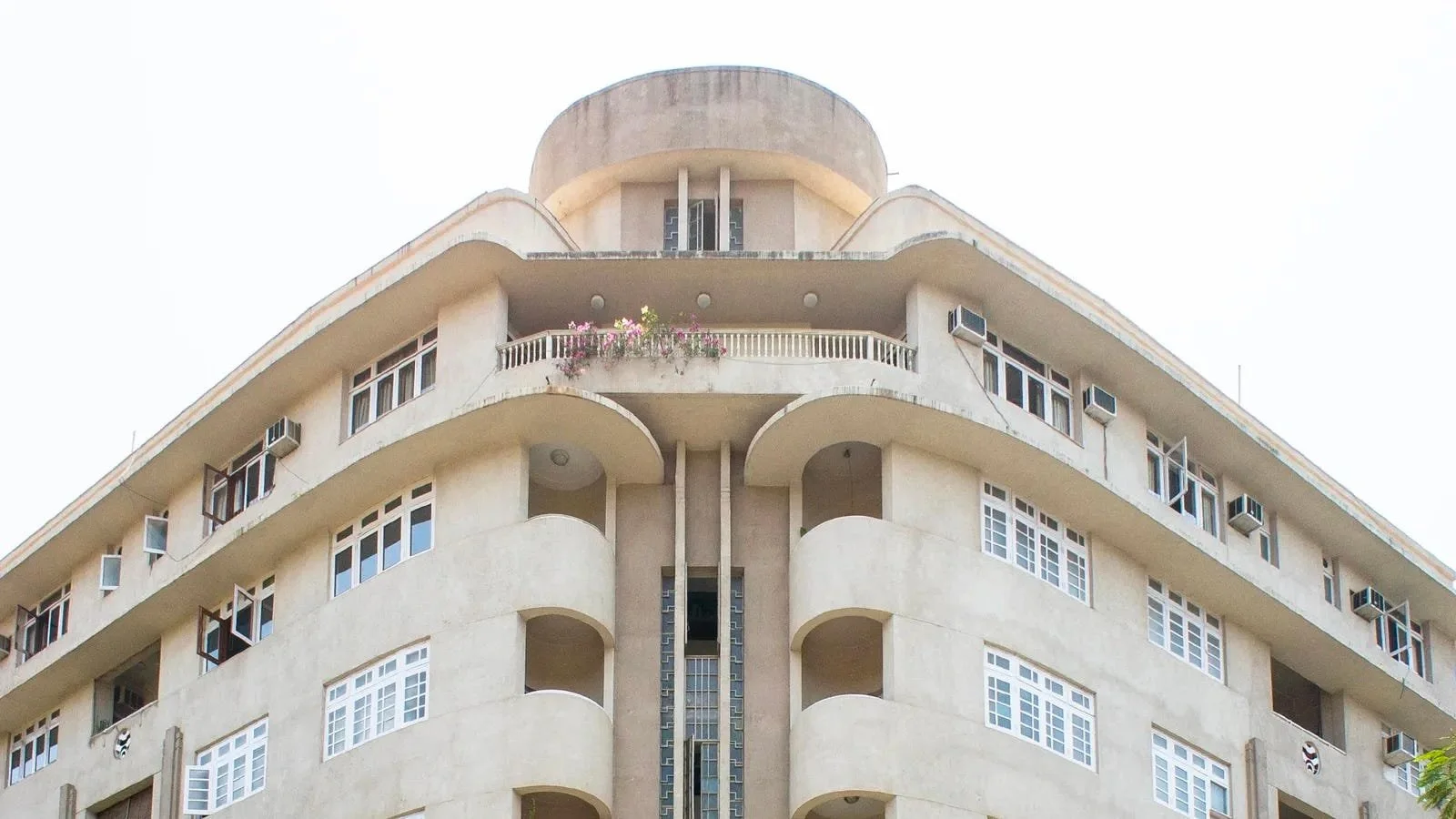
Art Deco is defined by its streamlined, geometric shapes that came to represent modernism. It originated in France in the 1920s and soon gained prominence around the Western World. Affluent Indian architects and designers trained abroad, returned to India between the 30s and 50s with a desire to shift away from both British imposed Victorian Gothic architecture and more traditional Indian design. They left their mark with Art Deco, covering large swaths of the southern part of the city of Mumbai which then spread to other cities, towns, and villages around the country.
Today, Mumbai has the largest collection of Art Deco architecture in the world outside of Miami. While maintaining the traditional elements of Art Deco, the Indian designers incorporated more nautical elements given the city’s proximity to the water and integrated references to Indian culture in the motifs.
Through the work of activist Atul Kumar and his organization @artdecomubai, they listed more than 375 buildings in South Mumbai and worked to receive UNESCO world heritage protection in 2018 for the area. Per Kumar, “What is special about Mumbai’s architecture, and about Art Deco in particular, is that unlike Delhi it is not all monuments or public buildings. It is homes and schools and cinemas, spaces we have lived in, grown up with and can relate to.”
While Art Deco started in Mumbai and other large cities, it also inspired the architecture and design of smaller towns across India. Morvi is one such town. It is a small Indian town in the Western state of Gujarat, four hours away from the nearest city. There, the Maharaja Mahendrasinhji inspired by the Art Deco movement decided to build his family home aptly named The New Palace.
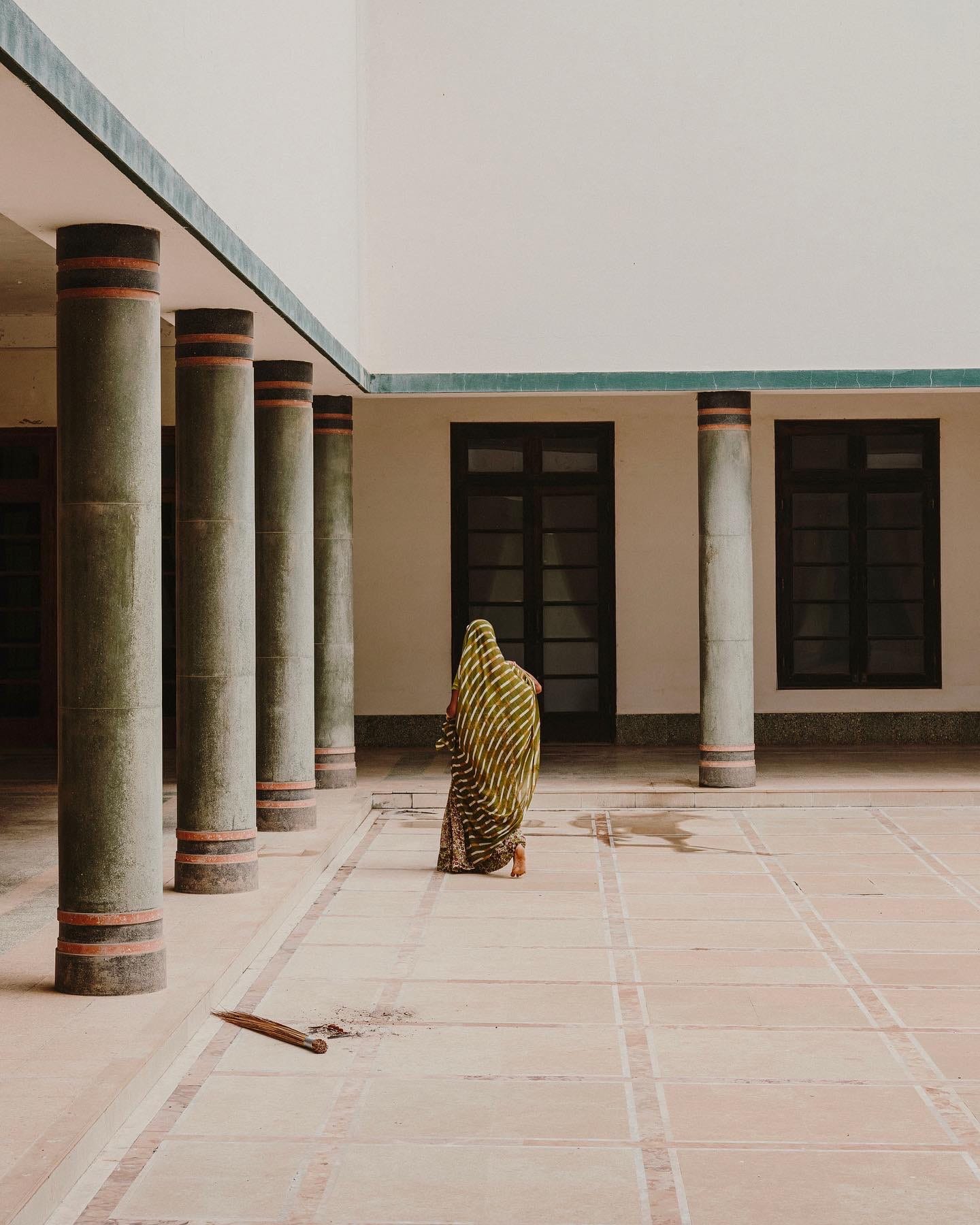
Similar to the architectural style found in Mumbai, the New Palace combines the grandeur of Art Deco with traditional Indian elements. The marbled and decadent dining and reading rooms flank an internal courtyard, found in most traditional Indian homes. The interiors have further references of the mix of east and west with art by Stefan Norbil with scenes of Hindu gods, Krishna and Shiva, along with flapper-esque portraits. Norbil, a Polish painter who fled Nazi occupation to become one of the most famous Indian palace artists.
The New Palace and more broadly, the advent of Art Deco in India, is a symbol of the shift in post colonial India towards a new East meets West aesthetic that continues to be the foundation for modern Indian design today.