In India, design isn’t an afterthought—it’s a necessity
The Goods is my monthly running list of what’s caught my eye lately. Think of it as a grab bag: some things sharpen your collecting eye, some things are just good to know, and all of it shapes how I’m thinking about taste right now. Because taste is a moving target. What matters is building the muscle to notice, and then notice again.
I’m not sure how to begin writing about my trip to India.
The trip already feels like a lifetime ago, and also like yesterday. From the moment I landed, the familiarity of the sights, sounds, and smells made me feel immediately connected - at home in a way my body remembered.
Going to India for the first time with my own family, and being there with my parents, sister, and brother-in-law, felt surreal. Moments like watching my kids see a world I viscerally remember encountering for the first time. And watching my parents watch my kids soak up the little details of the country they left forty six years ago. It felt like little loops in my heart closing.
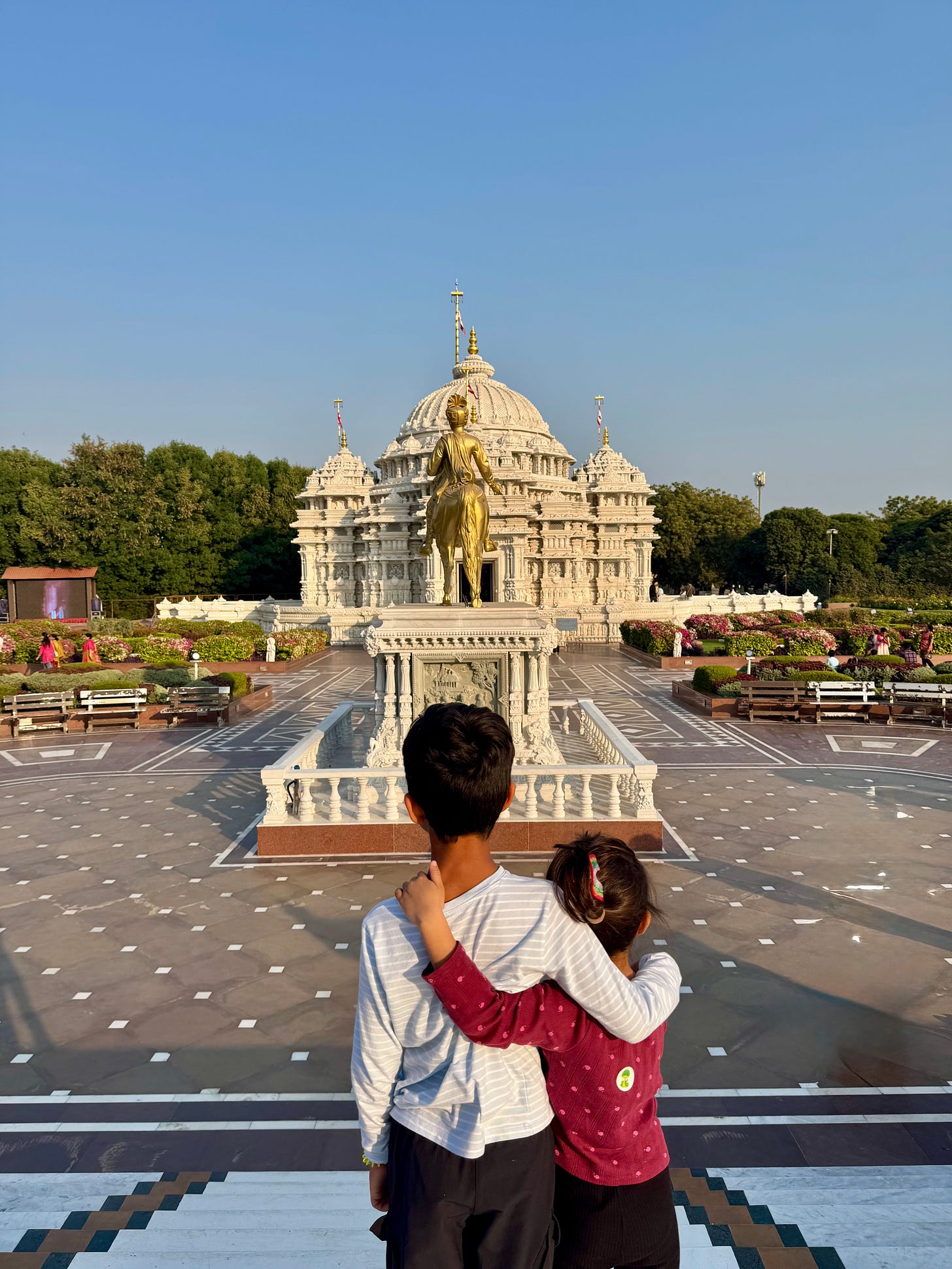
Ending our mandir (temple) tour through rural Gujarat at Sarangpur where baby me climbed all over these stairs.
And of course, so much beauty, so much curiosity, so much noise, so much chaos. The way color shows up everywhere. The way design isn’t an afterthought, it is a necessity when you have so many people in such little space. The way days feel stretched out under the sun and the way I get completely ripped off with my accent despite my best efforts.
So this month’s Goods is an attempt to distill highlights from our travels through Ahmedabad, villages in rural Gujarat, Udaipur, and Mumbai - places that made me stop, spaces that gave me ideas, and of course spots that are worth the maze of traffic.
Our trip started in my dad’s hometown of Ahmedabad in Gujarat. On one of the first days there, we were able to visit a primary school in the agricultural village of Hirapur that was built in memory of my cousin Shalin who passed away after his battle with stage four cancer in 2015 at the age of 21.
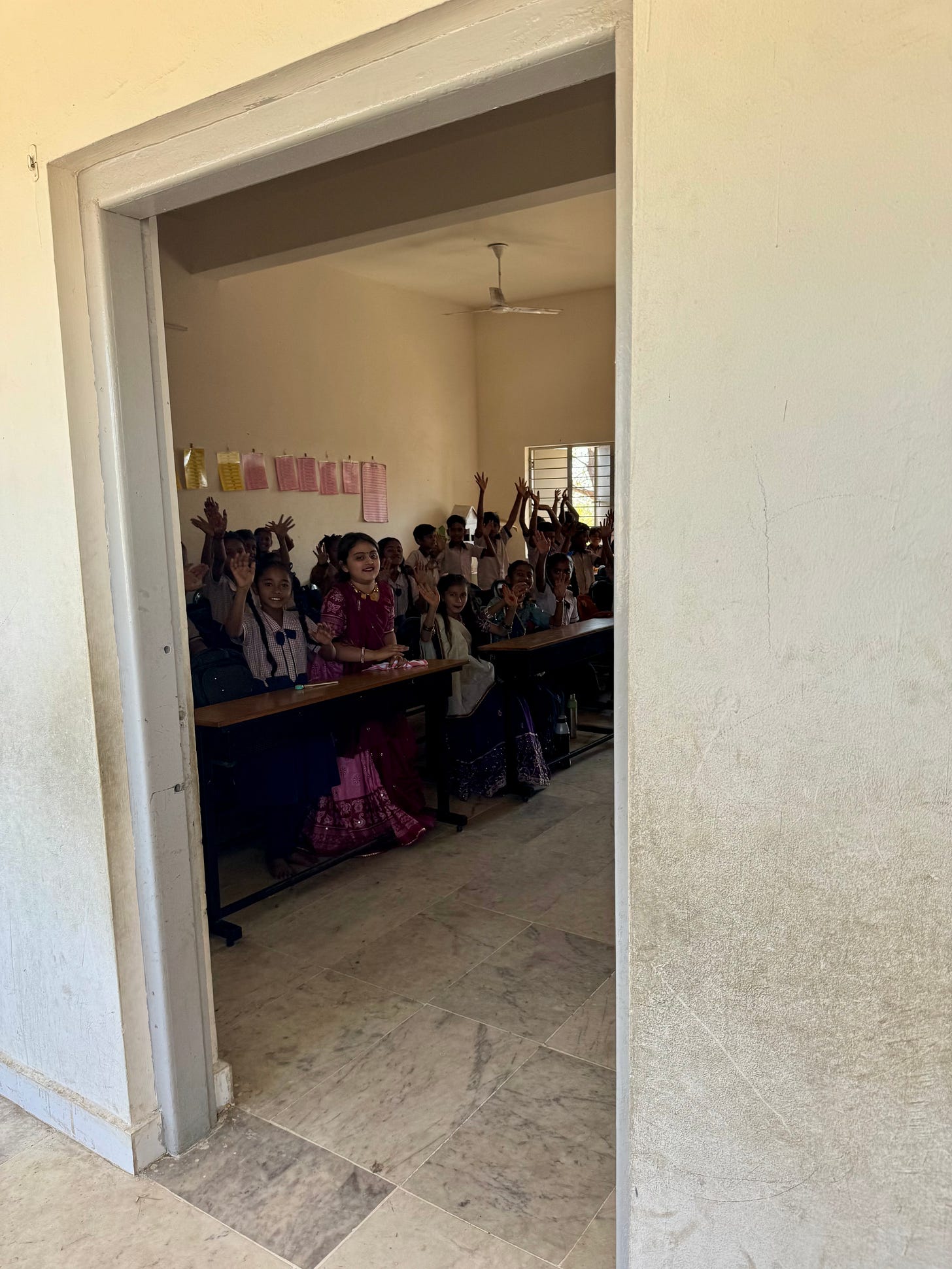
My HEART! Visiting
The Shalin Happiness Foundation Primary School
built to carry forward the legacy of my cousin, Shalin Shah.
The Shalin Happiness Foundation Primary School opened up a few years ago with a full renovation to the building, grounds, bathrooms, and water supply. It now has over 600 students that it serves and has become one of the strongest performing rural schools in the area. It was so special to tour the school, meet the kids, and watch incredible performances they had spent weeks practicing.
Their joy, love for learning, and gratitude for the school were infectious. My kids were buzzing on the way back - asking many questions about the way the world works, why things are the way they are, and what else we could do. I know my cousin would have been beaming.
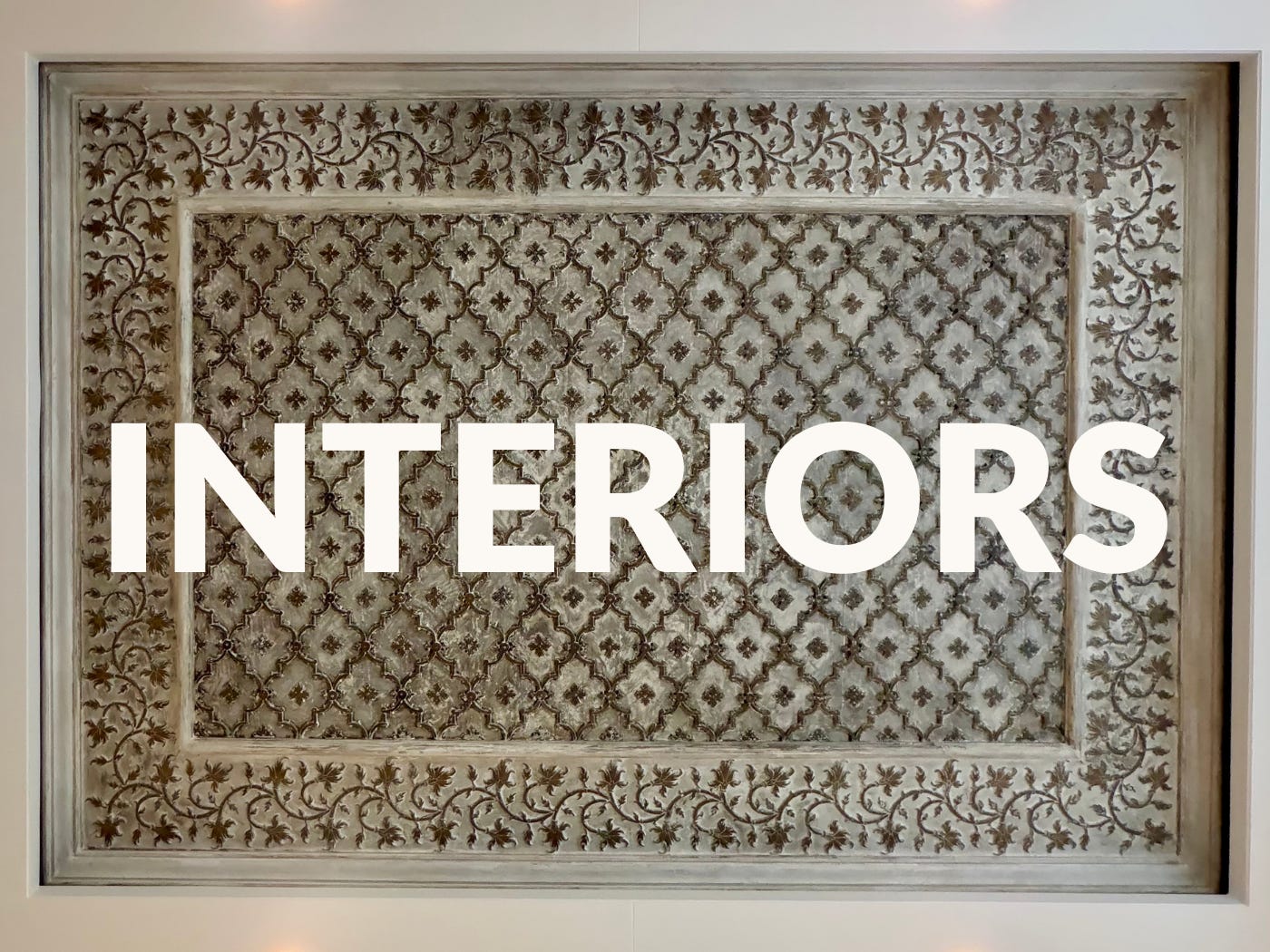
An old door turned into an incredible ceiling at my parents home in Ahmedabad.
What India does best is the mix of old and new—sometimes intentional, often just the natural result of living fully in a place that moves fast. The homes have a design forward and lived-in quality that showcase craft and intention, but not at the expense of ever feeling unapproachable. An old door that is used as a ceiling (shown above), a modern silhouette of a balcony swing (a mainstay in most Indian flats), traditional motifs on wallpaper with sleek back-painted glass cabinets, and pattern play in the bathrooms.
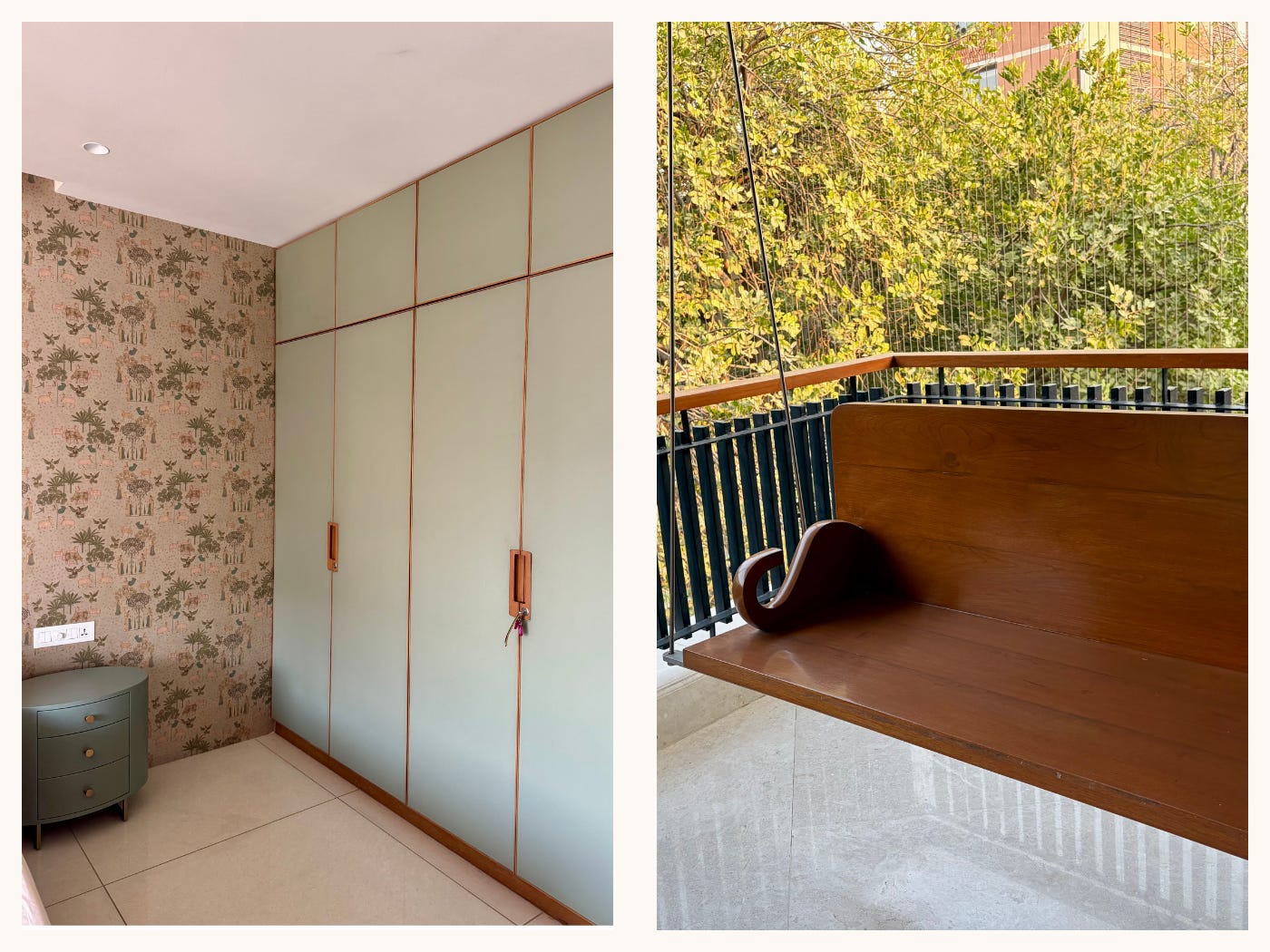
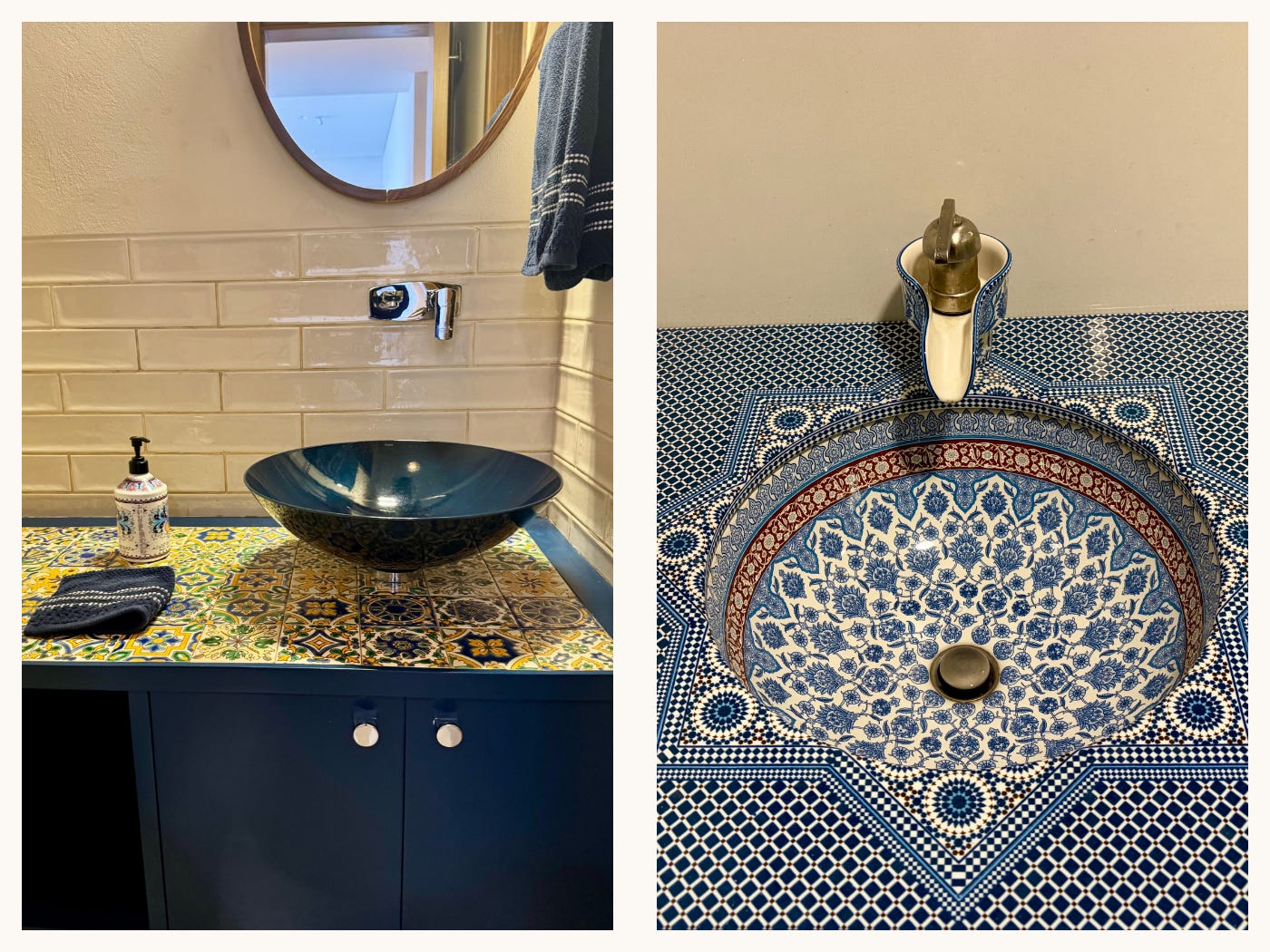
Images from my parents and aunt’s homes in Ahmedabad that seamlessly blend traditional designs with modern aesthetics. Both spaces were designed by
Outside of homes, many of the restaurants we went to blended heritage with a contemporary perspective on everything from food, ambiance, and of course the design. Two standouts were Agashiye in Ahmedabad and Bombay Canteen in Mumbai.
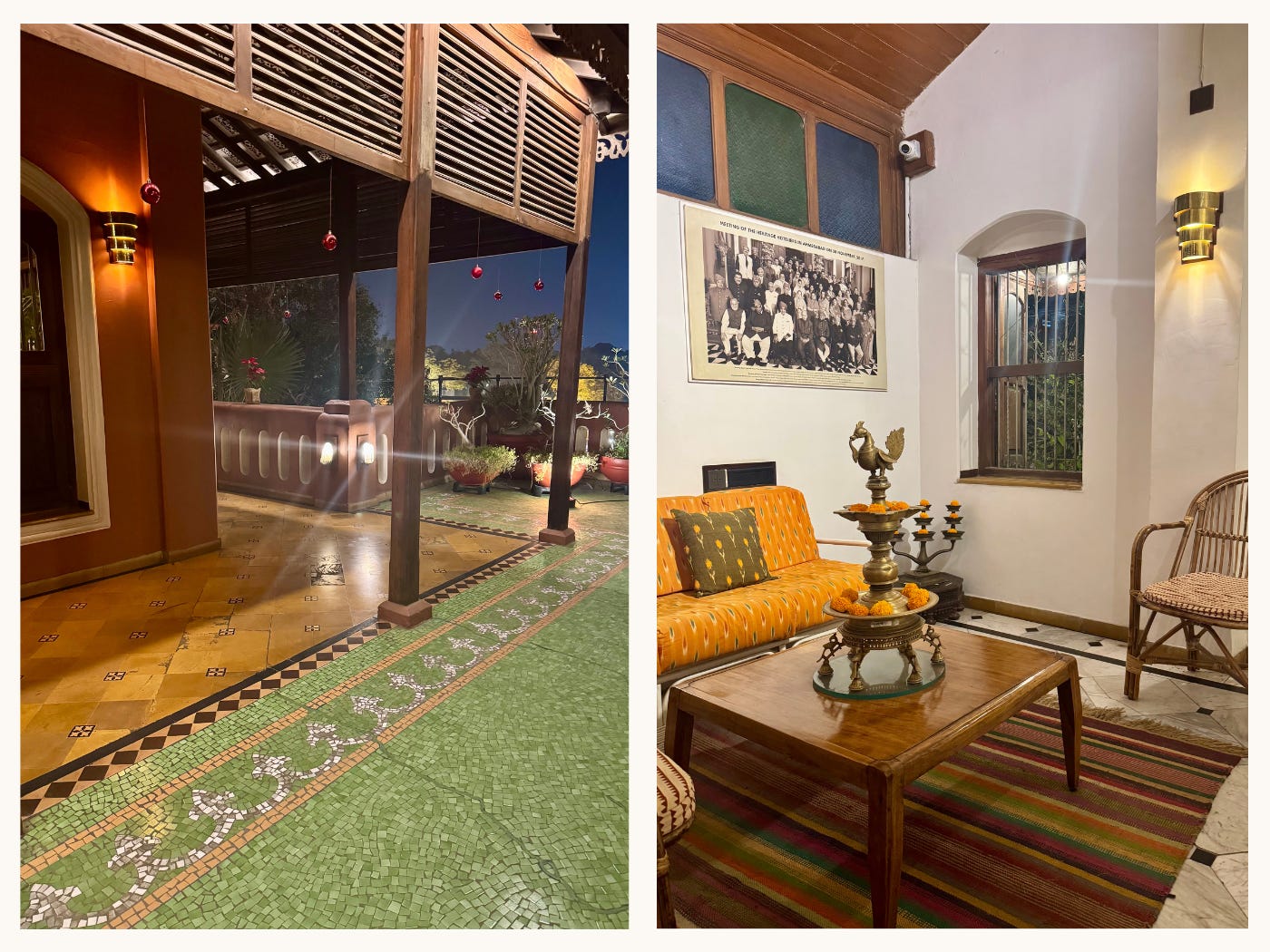
, Ahmedabad a rooftop restaurant housed in a heritage home filled with courtyards, warm light, and traditional craft that never feels old
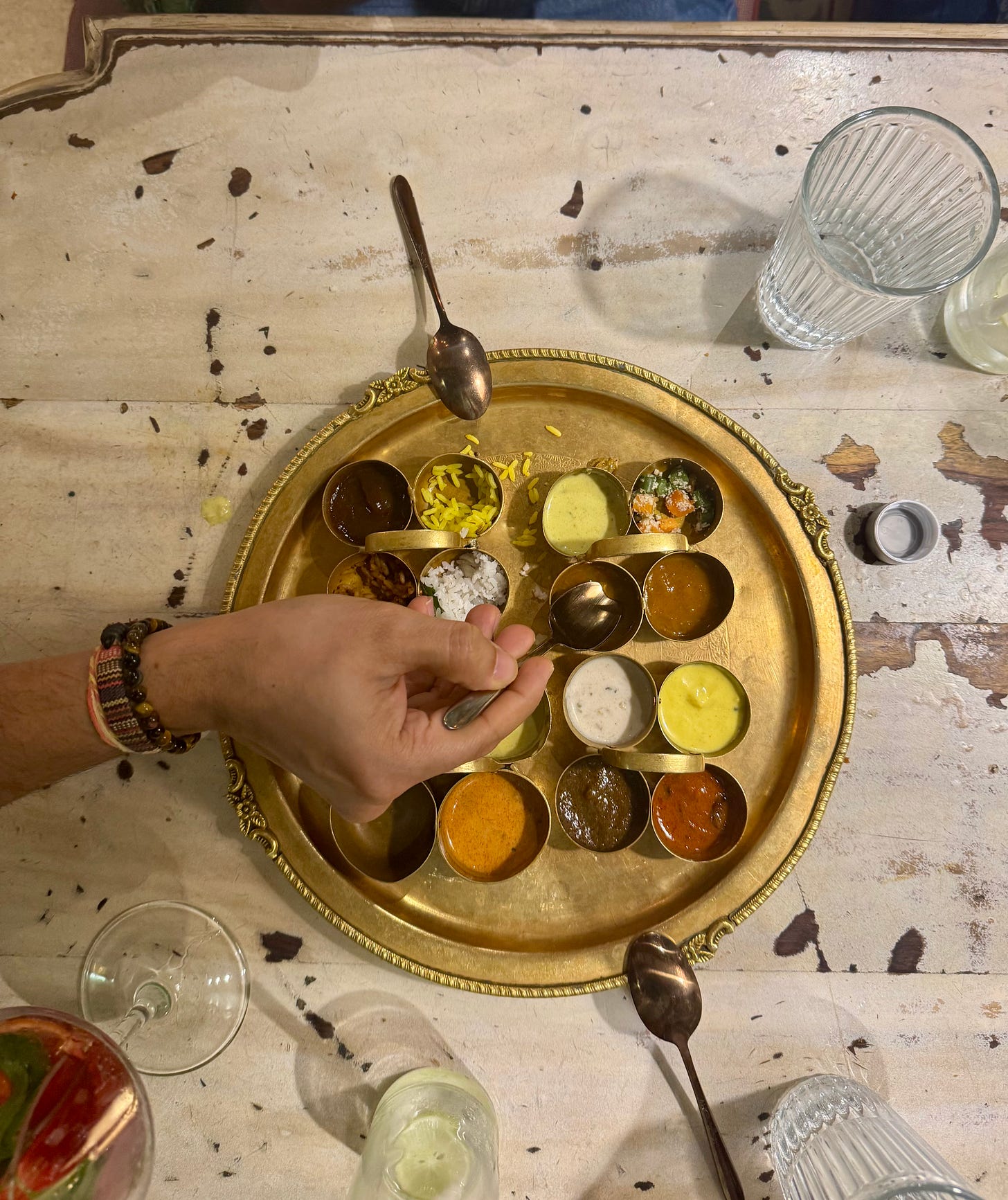
Agashiye (“rooftop”) sits on the terrace of a heritage home near Ahmedabad’s Old City. The whole place is warm light and courtyards filled with traditional craft that never feels old. You eat a Gujarati thali slowly - seasonal vegetables, daal, fresh roti and bhakri. It’s a feast, but set to the rhythm of impeccable service, live music, and the buzz of the city below you.
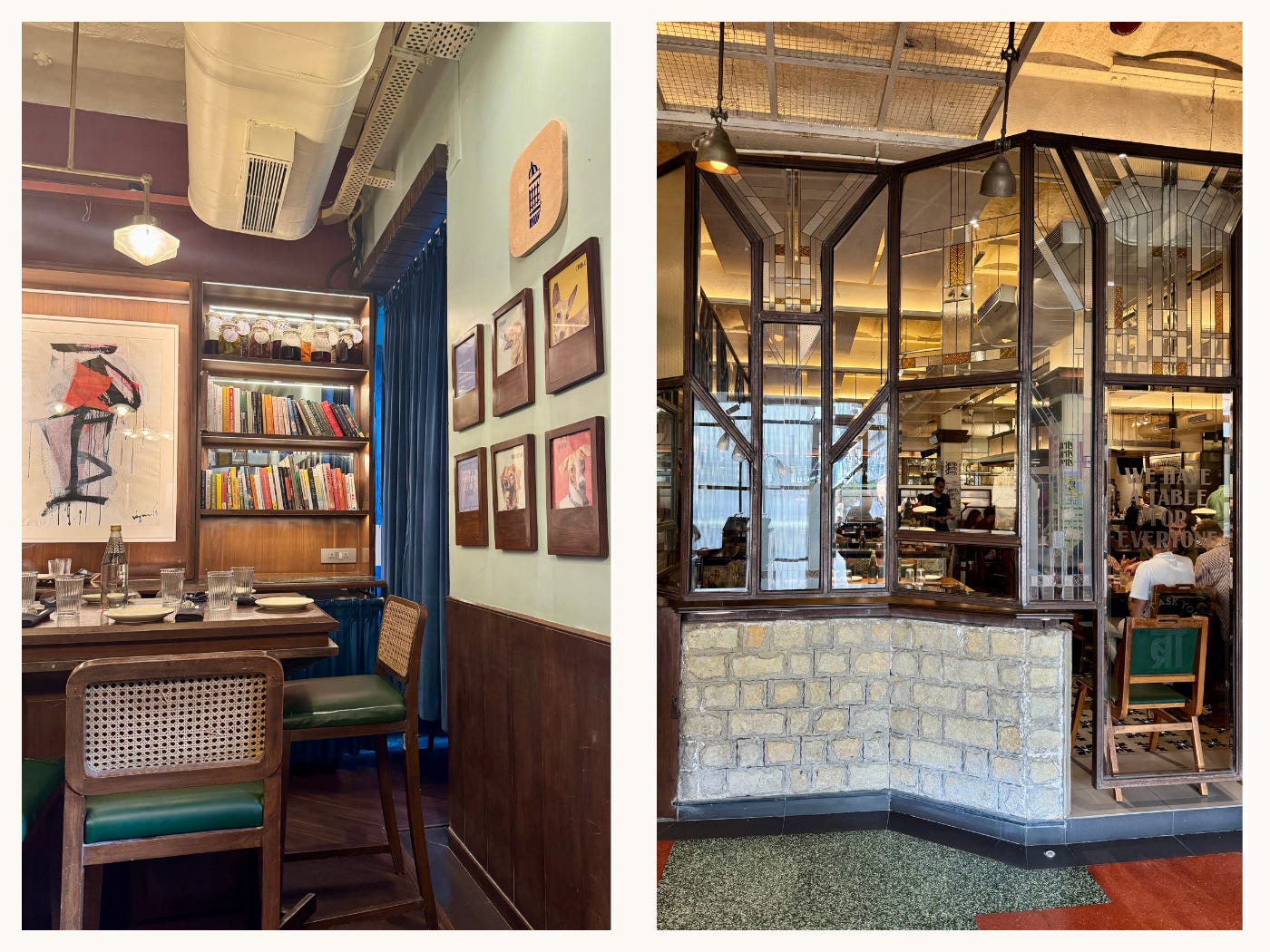
Bombay Canteen pays homage to the glamour of old homes with distinctively modern edge
Bombay Canteen is at the other end of the traditional-to-modern spectrum. The layout nods to a colonial home with a reading room, living room, gathering spaces, but with a distinctly modern edge. Art deco and mid-century references sit next to abstract and graphic art, including little love notes to Mumbai’s architecture on the walls.
The restaurant is known for its cocktails, and the menu has a sense of humor—drinks named after failed menu items, nights they’ll never forget, and regulars who became family. From the moment you walk in, it’s clear the place cares about every last detail.
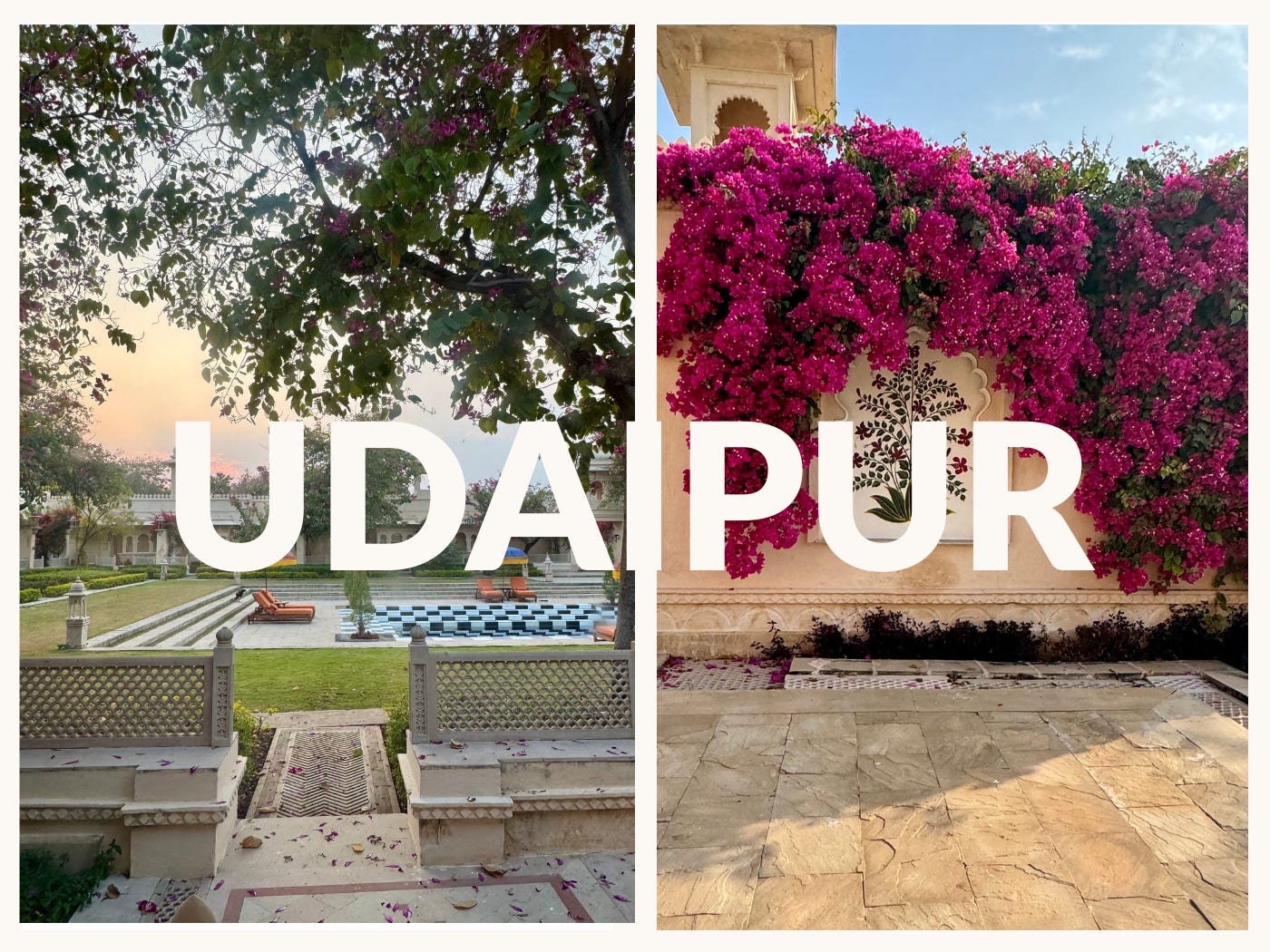
No bad angles at the Udaivillas in Udaipur
Udaipur has had a recent wave of fame thanks to billionaire weddings, but it’s a special place that is steeped in history, craft, and detail. The City Palace in Udaipur is the main site to see and was built over 400 years by 23 generations of rulers. It is a behemoth with a mix of various courtyards, gateways, hidden corridors and art everywhere. The lattice work jharokha windows are stunning as are mirror-clad rooms, silver and marble inlay art, and colored glass sculptures.
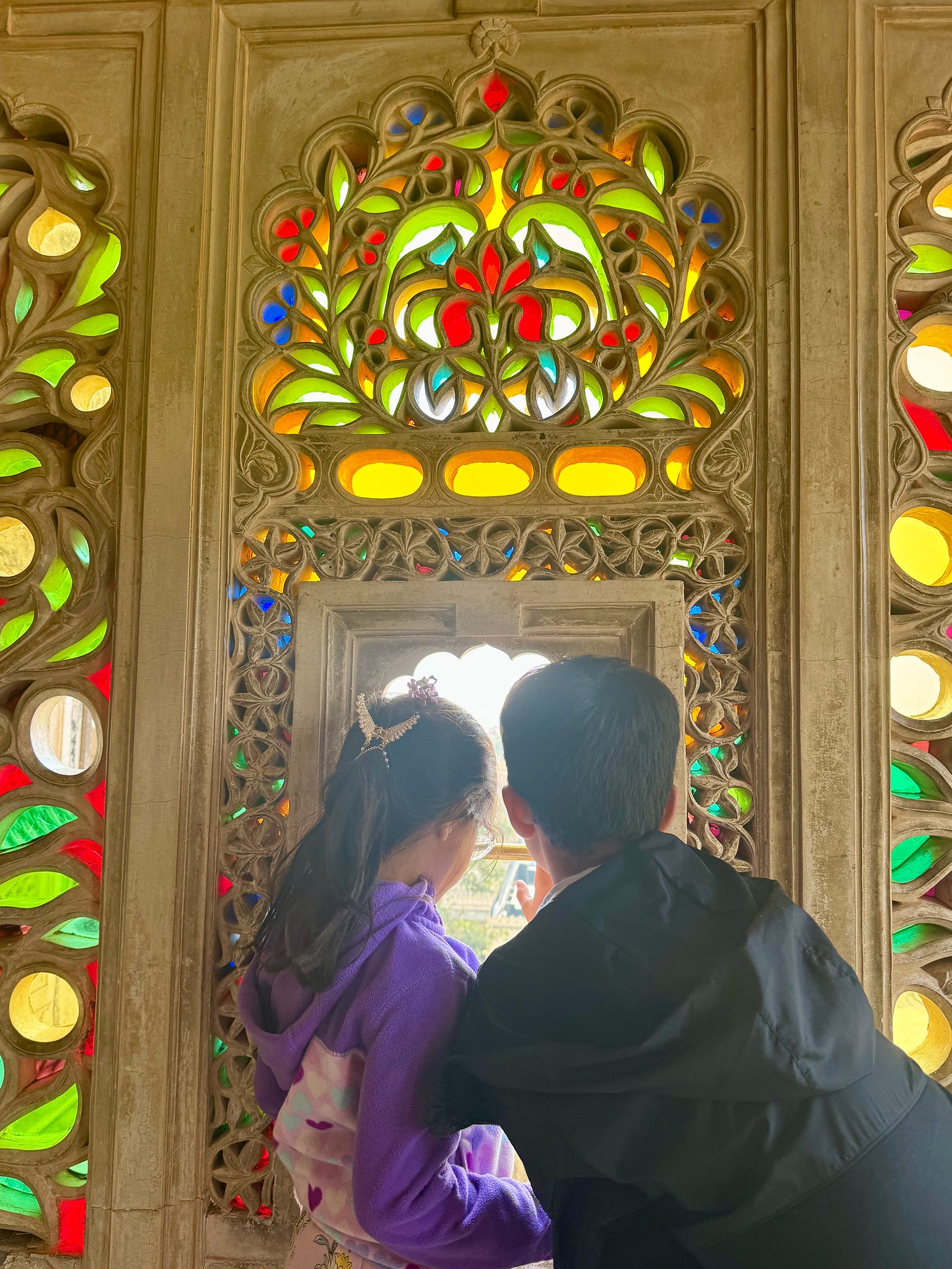
One of the many ornate windows at the City Palace in Udaipur that my kids were in awe of
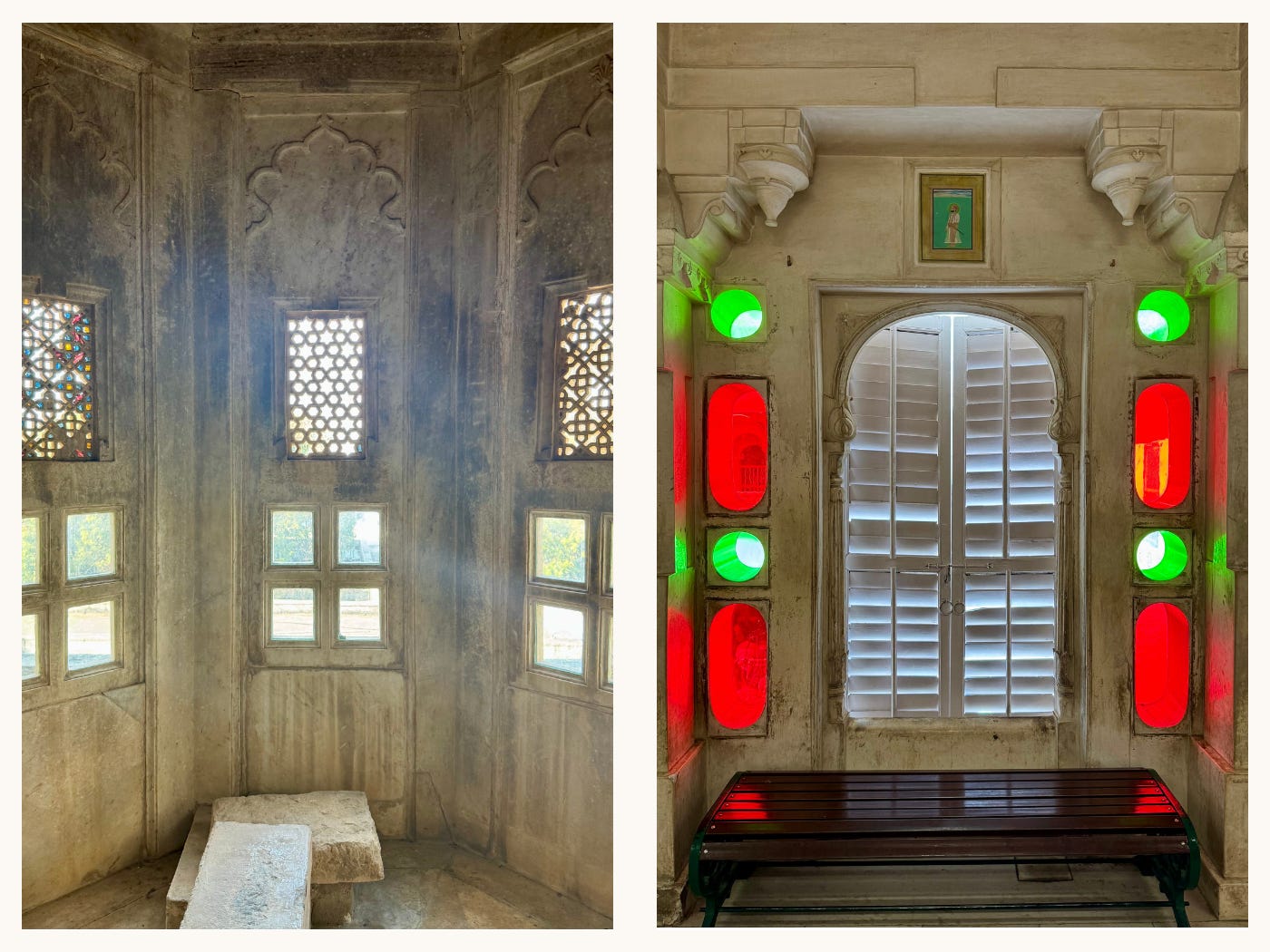
More windows with lattice work, colored glass, and perfectly placed miniature art.
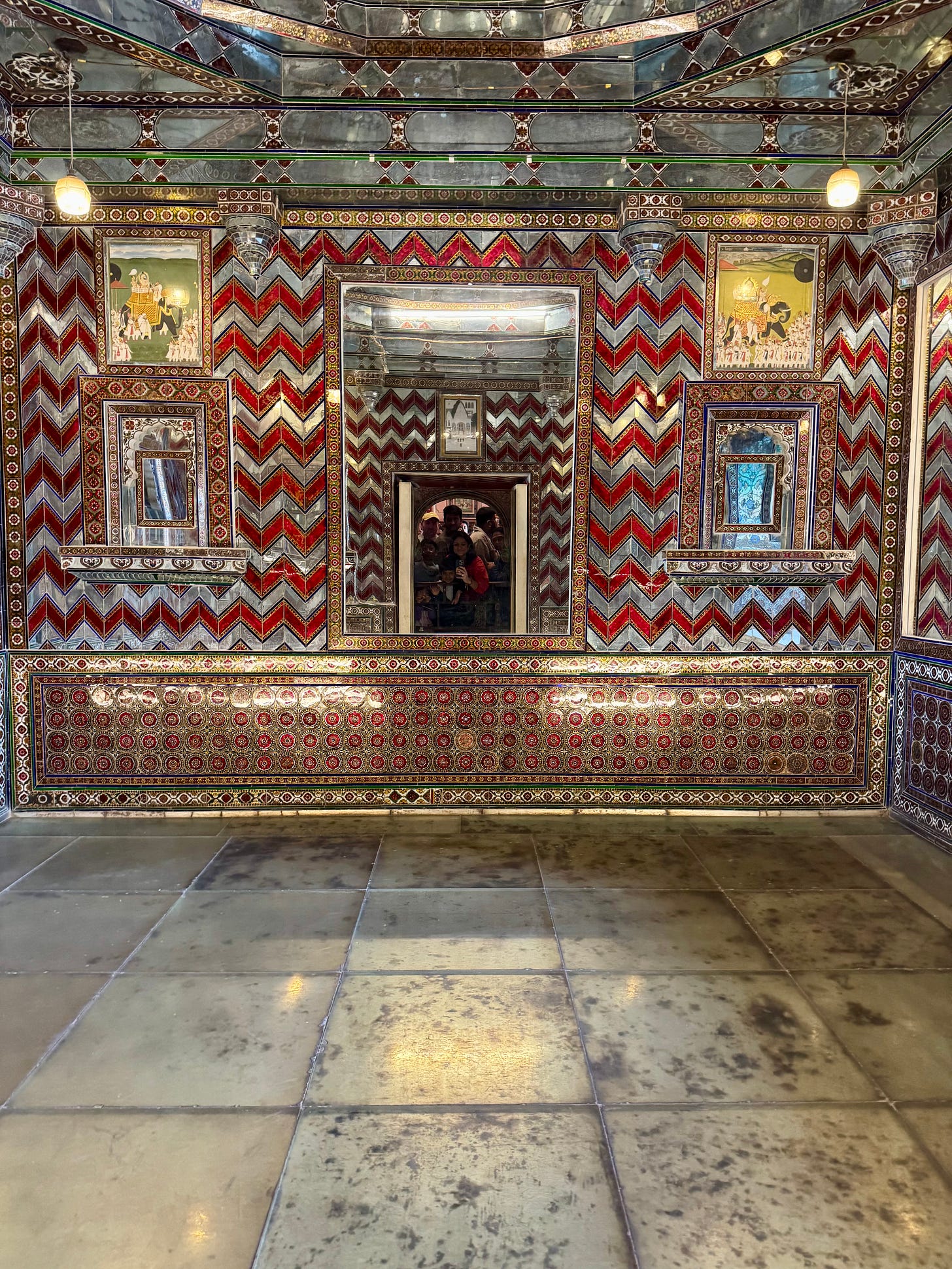
Sheesh Mahal (Mirror Palace) at the City Palace in Udaipur.
Interestingly, some of the tiles and art also feature the trade the kingdom had with other countries. Chinese tiles were brought by Portuguese travelers in the early 18th century and Dutch Delft tiles brought by Dutch traders as a gift to the King in the 19th century that depict a story of escape from Egypt.
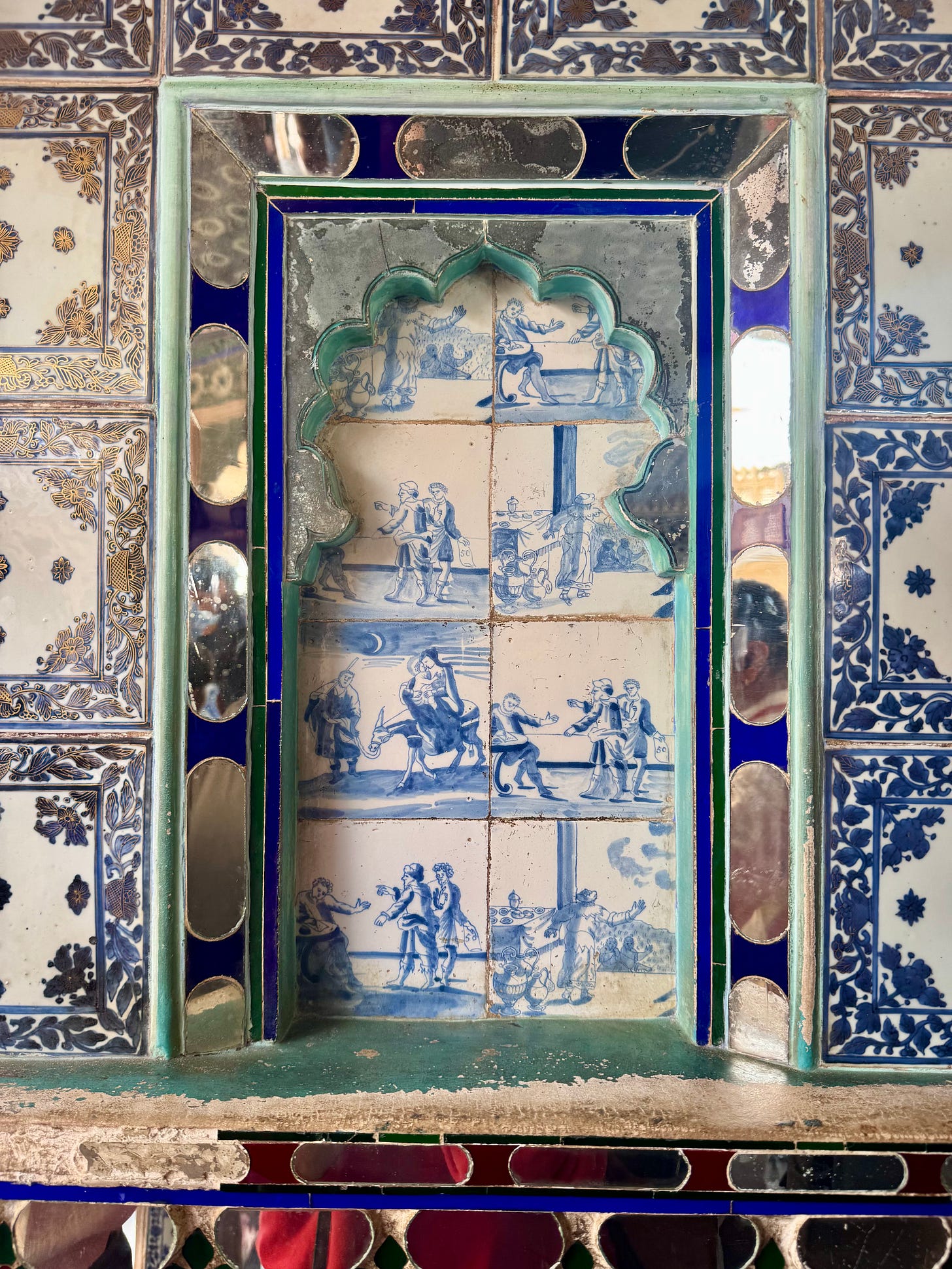
Dutch Delft tiles inside an Indian palace - evidence of trade routes hiding in plain sight.
As we made our way into the old city and my head spinning with all the inspiration we had just been immersed in, we popped into a small shop, Shreenath Silver and Art, to see if we could find a piece that would carry the stories of the city back with us.
The owner Vinay, walked us through how Mewari (one of the regions of the state of Rajasthan) miniature art was made including the use of natural pigments, like lapis lazuli for blue or cow urine for yellow, that are crushed with gum from the acacia tree to create pigments. The works are then painted with the thinnest brushes made from the tail of a squirrel.
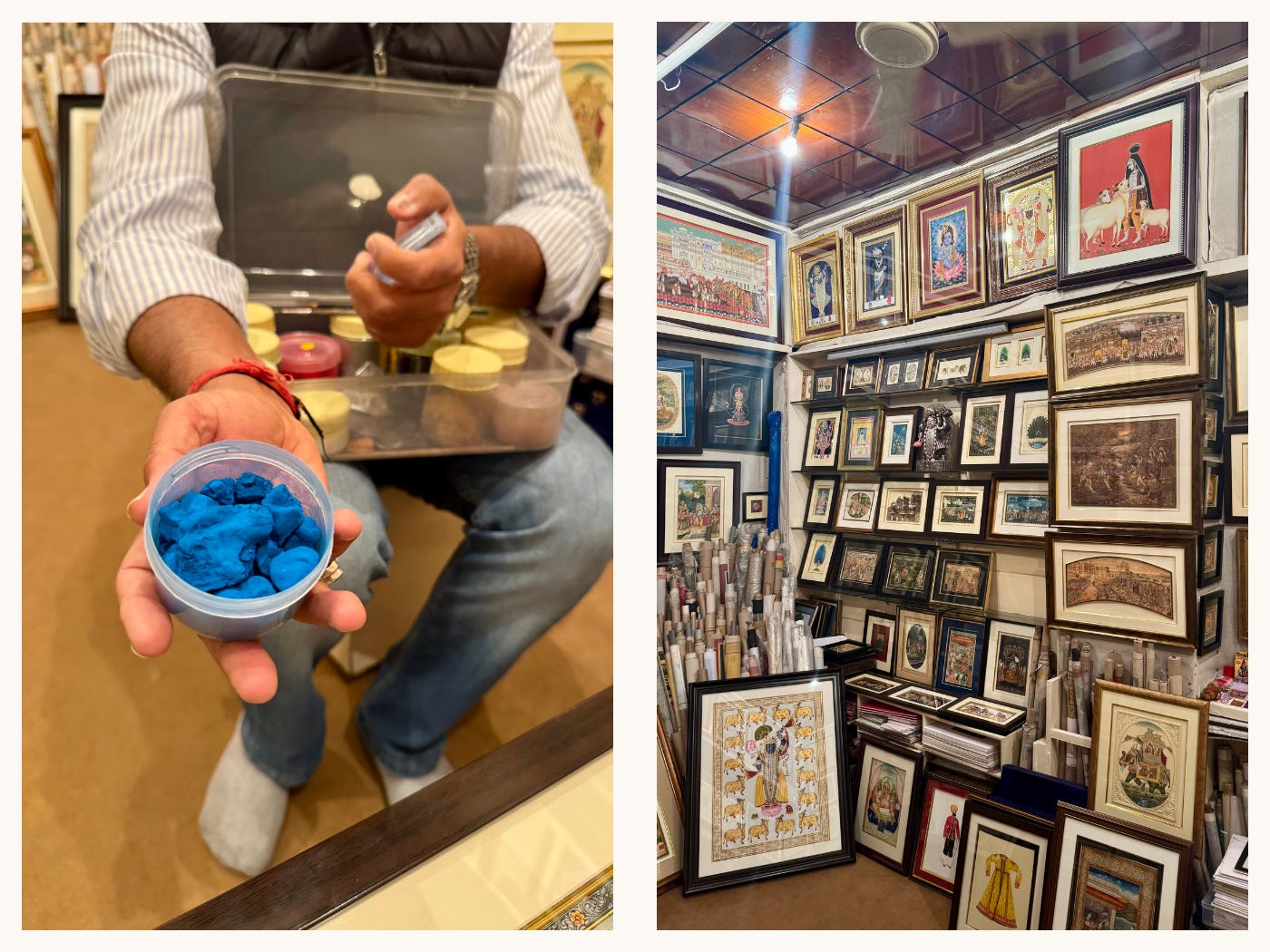
Learning about how Mewari miniature art is made from pigment to the incredibly detailed works
We purchased two pieces from Vinay’s store, the Peacock below which is a symbol of Saraswati (the Hindu Goddess of learning) painted with gold leaf and a classic Mewari painting of a procession coming into city palace with Lake Pichola and the Aravalli mountains in the background. (Note: the pieces came framed, but the procession piece definitely needs some realignment and TLC).
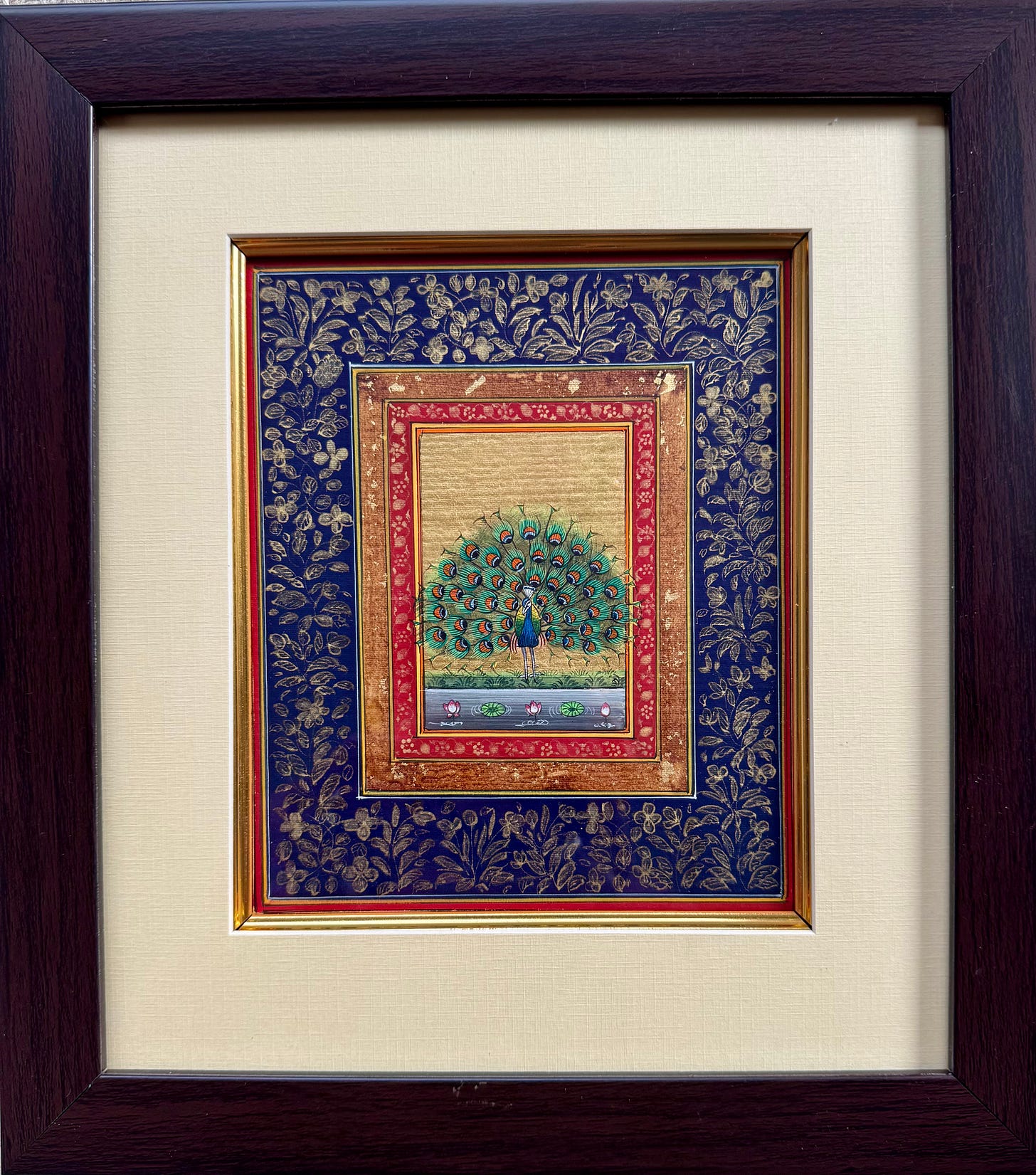
The peacock, a symbol of Saraswati (Goddess of Learning) that we saw roaming around Udaipur and Ahmedabad which was the perfect piece to bring home for the kids’ room.
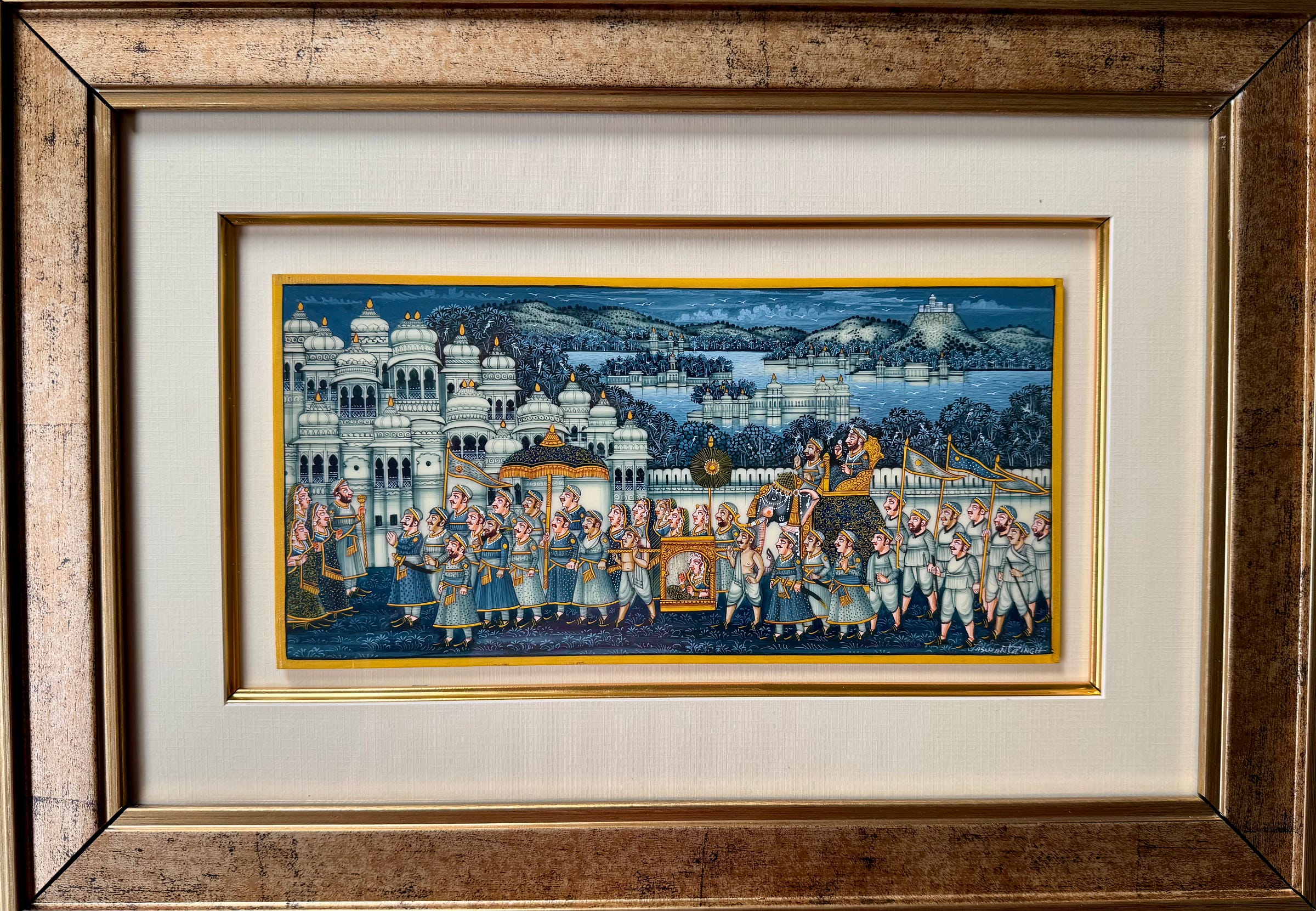
A typical Mewari miniature art scene with a wedding procession headed to City Palace with Lake Pichola and the Aravallis behind it. The detail from the outfits to the eyes to the landscape are incredible and took months to make.

Many afternoons of shopping each of the cities we travelled through. This cozy corner was at Obataimu where we brought the whole family and they were gracious enough to let the kids play music while we perused - I don’t think K-Pop Demon Hunters was the vibe they were going for, but they obliged.
Here’s what they typically play.
No trip to India is complete without shopping. Here are some of my favorite stores we bopped around on long afternoons fueled with cold coffee and squeezed in changing rooms with my mom and sister.
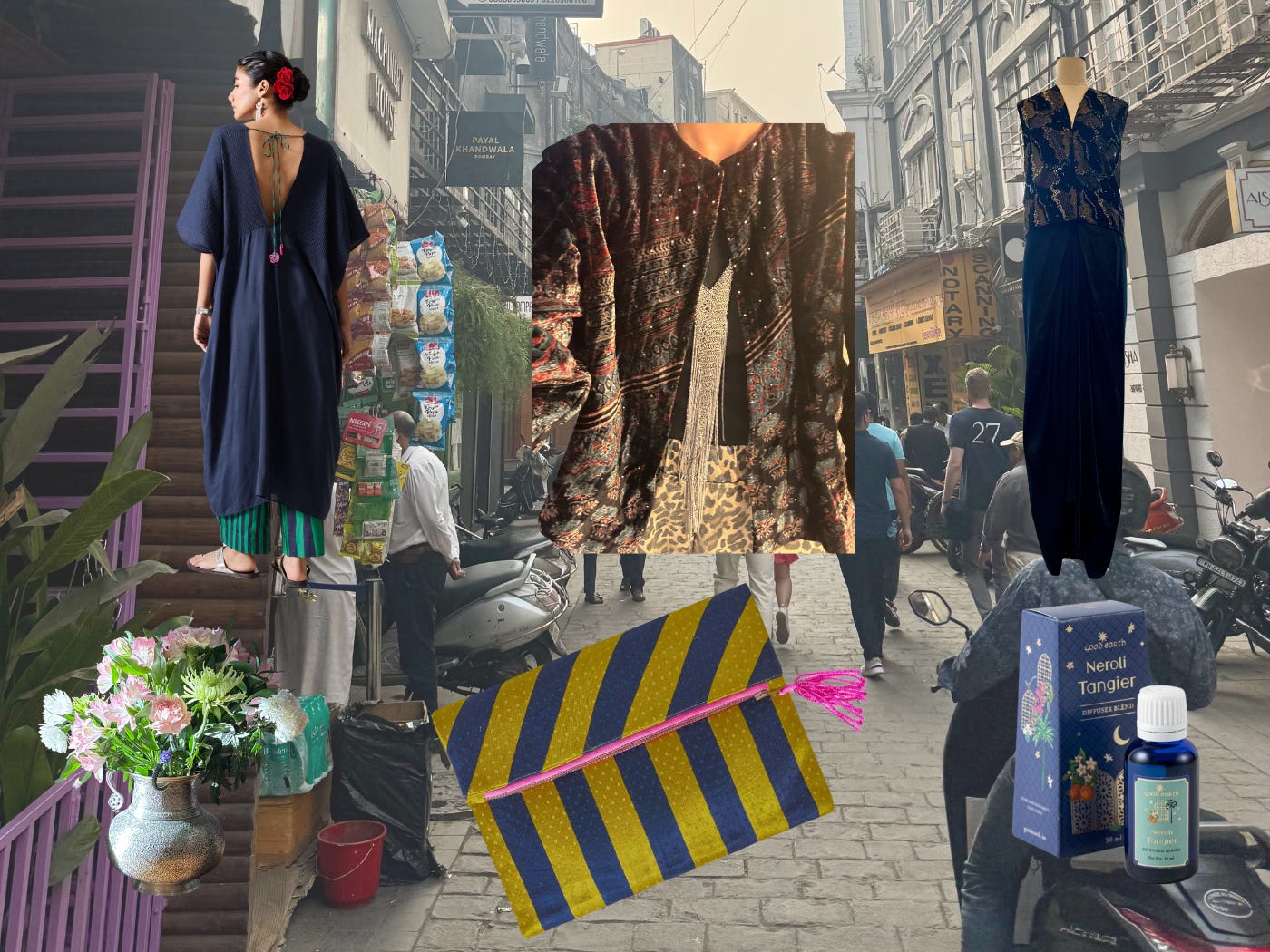
Some of my purchase (clockwise from top left): Kaftan from Nicobar that I would wear as a dress, Velvet jacket from Good Earth (paired with Zara fringe necklace and Le Bon Shoppe Leopard Pants), Vest from Kavita Bhartia, Neroli Tangier essential oils from Good Earth, Clutch from Nicobar, and vase from Good Earth
Nicobar (all over India) — The easiest kind of buy - clean silhouettes, travel-friendly, and still unmistakably India-rooted. The kind of store you just know you’ll be getting a few things for yourself and your home. I bought a kaftan (not very me, but felt inspired by the kaftan clad ladies in the street) and a very Dries-coded striped navy and chartreuse clutch.
Good Earth (all over India)— You walk in and immediately start thinking in texture: scent, velvet, metal, print. Their whole ethos is focused design stories rooted in the India, which makes it feel less like “shopping” and more like collecting objects with a point of view. My mom and I bought the store from home goods to matching essential oils to a few pieces of clothes.
Ogaan (stores in New Delhi, Mumbai, and Kolkata) — An incredible curation of Indian designers with an opportunity to try on five different “languages” of Indian fashion from ultra contemporary to classic traditional designs. I picked up an embroidered vest that can code switch from Indian to Western looks by a new to me designer, Kavita Bhartia.
Obataimu (Mumbai) — The store feels like a workshop with tailors working in the back, garments made slowly, and a real emphasis on process and materials (the name literally translates to “over time”). The showroom is basically a place to select cut and material and each piece is custom made for you. Since everything is custom, I’m still waiting to see the final product, but based on how much the store was buzzing and filled with people who had definitely been there before, I have a feeling it won’t miss.
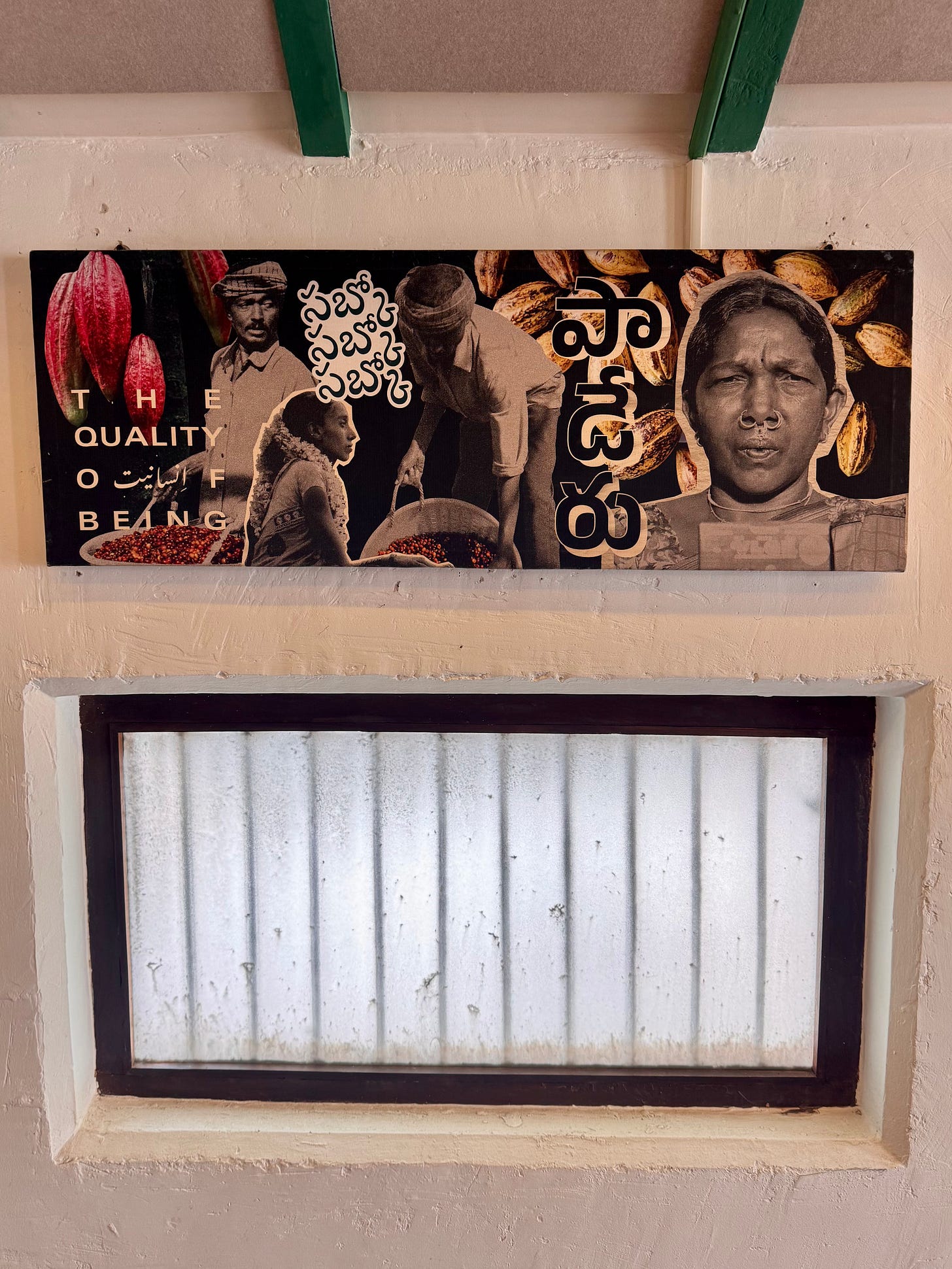
Mary Lodge by
in Bandra (Mumbai)
Coming home, I realized how much all of my senses have been recalibrated by being immersed in India. It feels like a totally different world that despite the sensory overload, teaches you to slow down, notice, and let all the little details wash over you. Here’s to more of all of that this year!