LA Art Week: Seeing Old Friends, Finding New Ones
Notes from LA Art Week
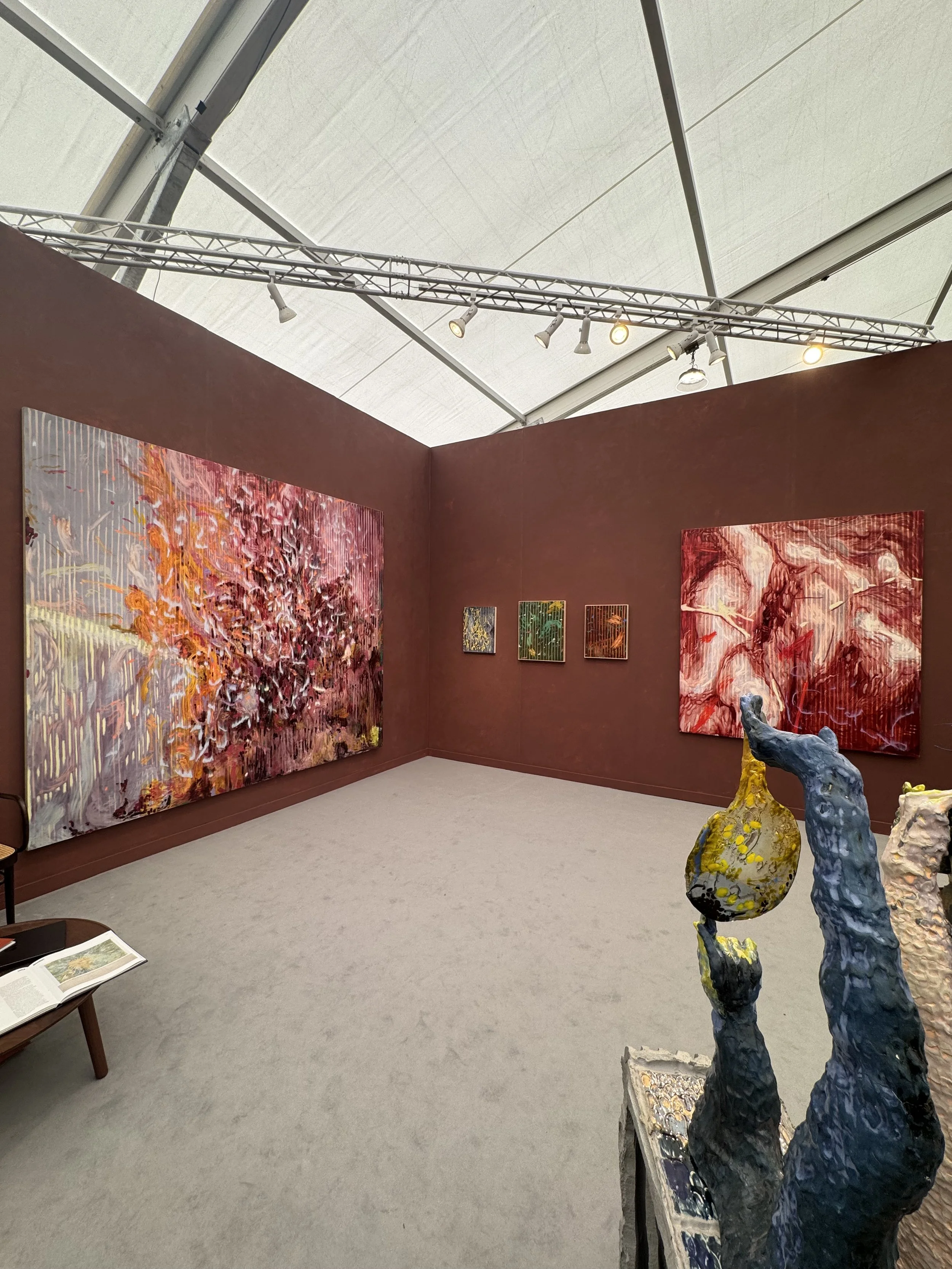
Even inside the big fairs, some of the most exciting looking was happening in the corners built for emergence. LA Gallery, Make Room’s booth at Frieze LA in the Focus section, highlighting emerging galleries. They presented works by Erica Mahinay, one of which was also acquired by the Santa Monica Art Fund
Having a little space from art week helps my brain separate what was loud from what actually stayed. When you’re in it, everything feels urgent, another booth, another opening, another room you’re “supposed” to see. A week out, the fog clears and I can tap back into what works made me feel something.
For better or for worse, I’m a frameworks gal (blame my dad and/or tech world training, but they are pretty embedded in my world view). All week I kept returning to two questions: what is the role of the artist, and how do we actually experience art?
In my humble opinion, I think Patti Smith in Just Kids sums it up perfectly. Smith, speaking about her disinterest in Warhol, describes her hunger for artists who define culture rather than simply mirror it. That’s the filter I keep returning to as I let the week sit in my body.
There’s no right way to experience art, of course, but earlier this year I went on a tour of Joseph Beuys’ exhibit at Thaddaeus Ropac, Bathtub for a Heroine. His work is spare and still somehow out of my comprehension. Our guide said something I’ve been thinking about ever since: don’t try to solve the work. Take time in front of it. Relax into it. Let it wash over you.
So with those two frames, I entered LA Art Week. There’s plenty written about the hubbub, the best parties, celebrity sightings, the social layer of it all, but what I loved most was giving myself permission to stand in front of something long enough for it to stop being “impressive” and start being intimate.
A week out, here are some of the threads (not trends!) that emerged for me.
Memory is the real medium
People say that an artist’s early work often starts with an exploration of identity, which is true, but incomplete. Identity is the first layer. Memory is the deeper one, and it takes longer. The artists I couldn’t stop thinking about weren’t just “making work about themselves.” They were building worlds where time, place, intimacy, and history were doing something active.
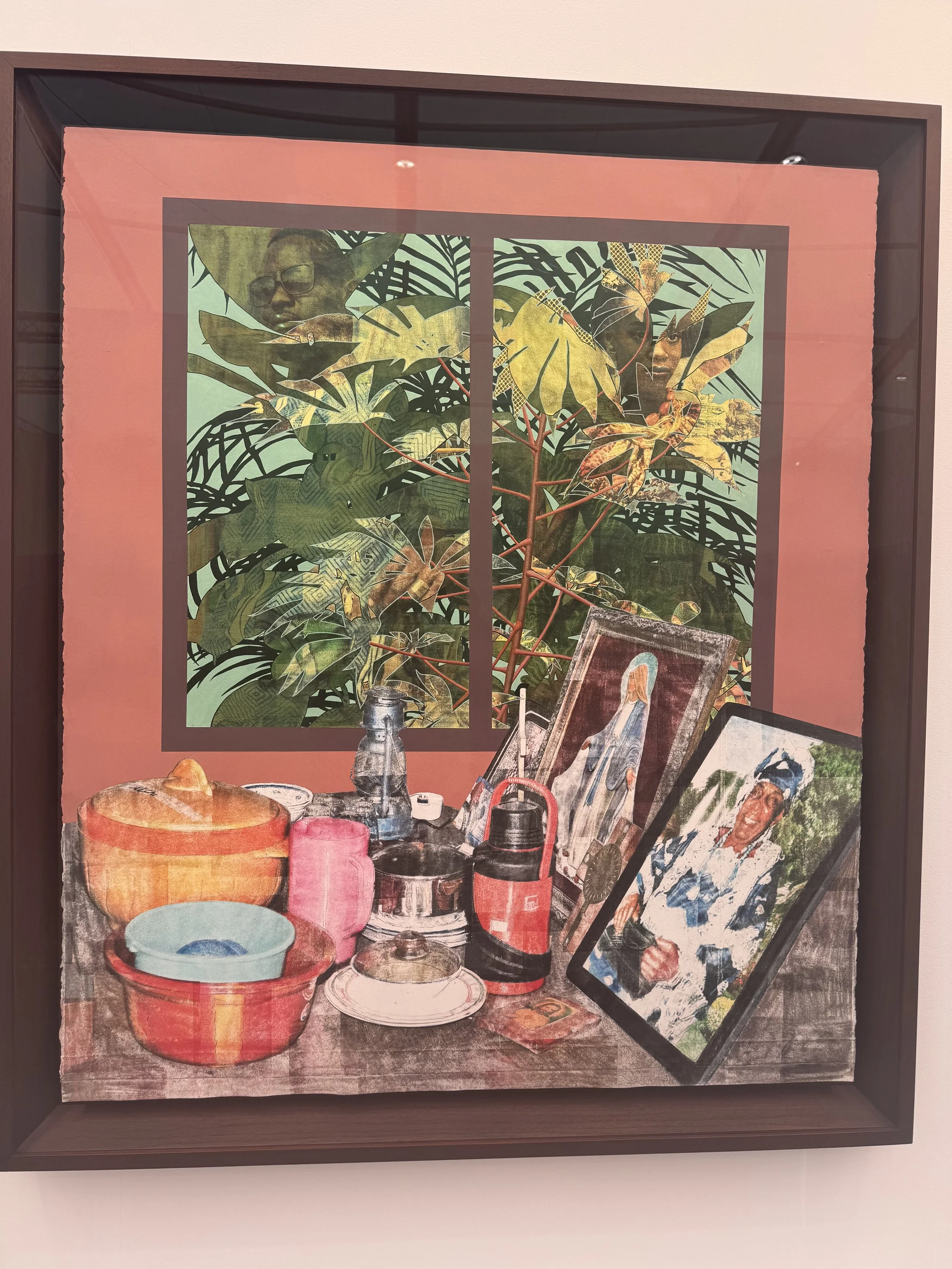
Njideka Akunyili Crosby, Grandmother’s Parlour, 2016 | David Zwirner
No work epitomized that better for me than Grandmother’s Parlour by Nigerian American artist Njideka Akunyili Crosby. The interior is familiar, domestic, everyday, but it isn’t simple. It holds multiple histories at once: personal references and cultural memory, private life and the politics of place, the way “home” can be a place where all your worlds collide. You feel it in the layering, and in the way the image refuses to flatten itself into a single read.
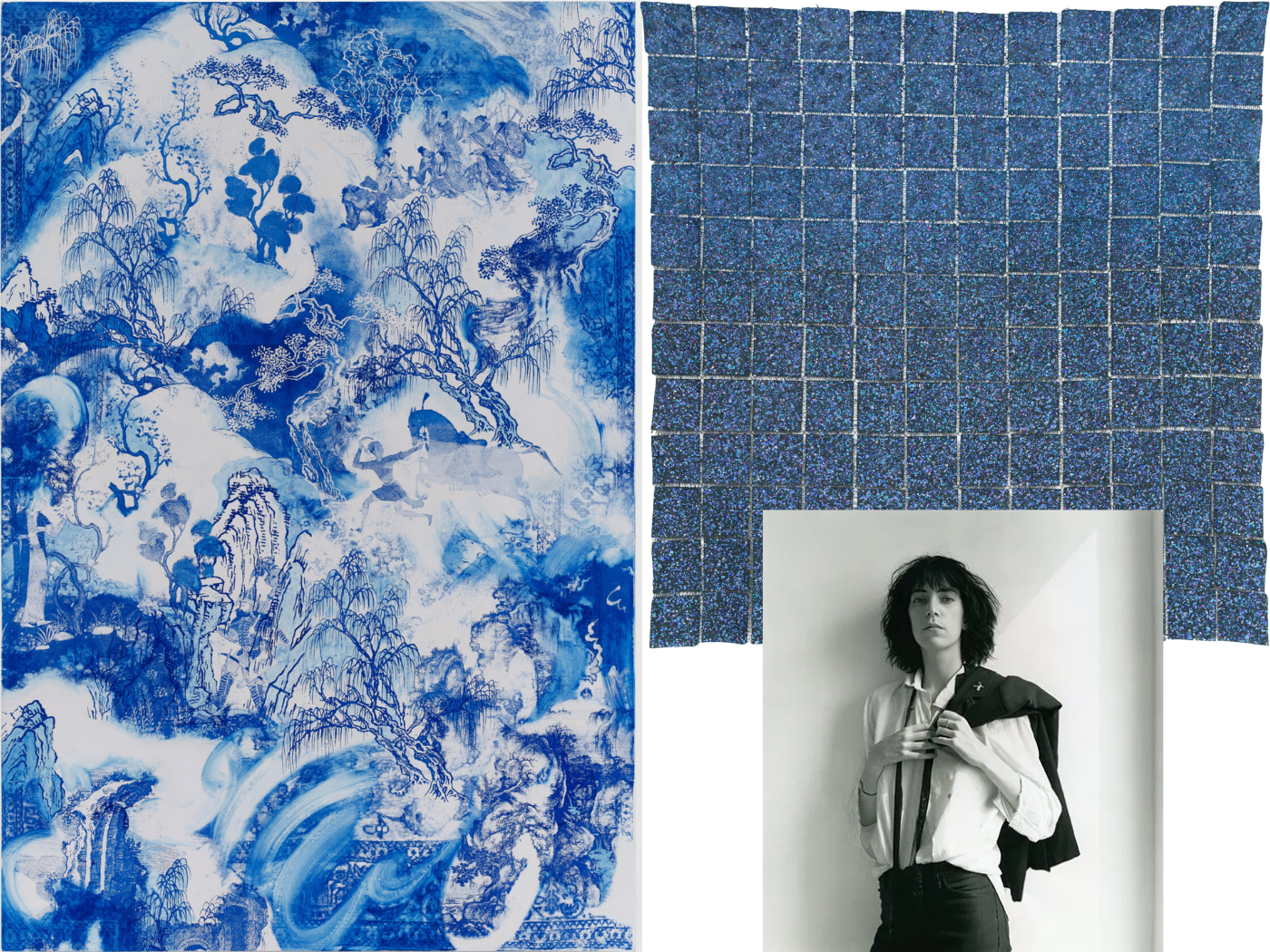
Kour Pour, Misty Mountain, 2025-2026 | Olney Gleason, Howardena Pindell, Untitled #48 (Deep Sea), 2025 | Garth Greenan Gallery, Robert Mapplethorpe, Patti Smith, 1975 | Gladstone Gallery
And then there’s the way memory evolves into your relationship with art. The longer you spend with certain artists, the more the work becomes braided with your own life.
A lot of what stayed with me last week wasn’t just the work in isolation, but what it unlocked. It’s like a song that takes you straight back to driving with your friends on a hot summer day, screaming the lyrics.
Kour Pour, because he’s one of the first artists I commissioned and placed. Seeing new work now carries that intense familiarity, the stories, the source material, the references, while also recognizing the evolution. You’re looking at the present, but you’re also looking at every earlier version of the artist you’ve met along the way. That long-view intimacy changes what you even notice.
Howardena Pindell, whose work, those intricate, obsessive dots, pulled me back into her story, her labor, the patience of it. Pindell worked at MoMA during the day and made art in the evenings, and her work has always felt like a reminder of consistency and devotion to the practice. It transported me instantly back to the first time her work reorganized my sense of what abstraction can be.
And Robert Mapplethorpe’s photograph of Patti Smith, larger than life, dropping me right back into Just Kids. Her words, her memories, that particular kind of creative hunger that still feels like a compass.
That’s what I keep circling: memory isn’t just something artists pull from. It’s something the work activates, in the artist and in you, if you give it enough time.
A return to the classics
A.I. is at a fever pitch across the board, and that’s what made this week’s countercurrent feel so clear. I kept being pulled toward work that insists on the opposite. Work that took time and training, with proof that a human has been here.
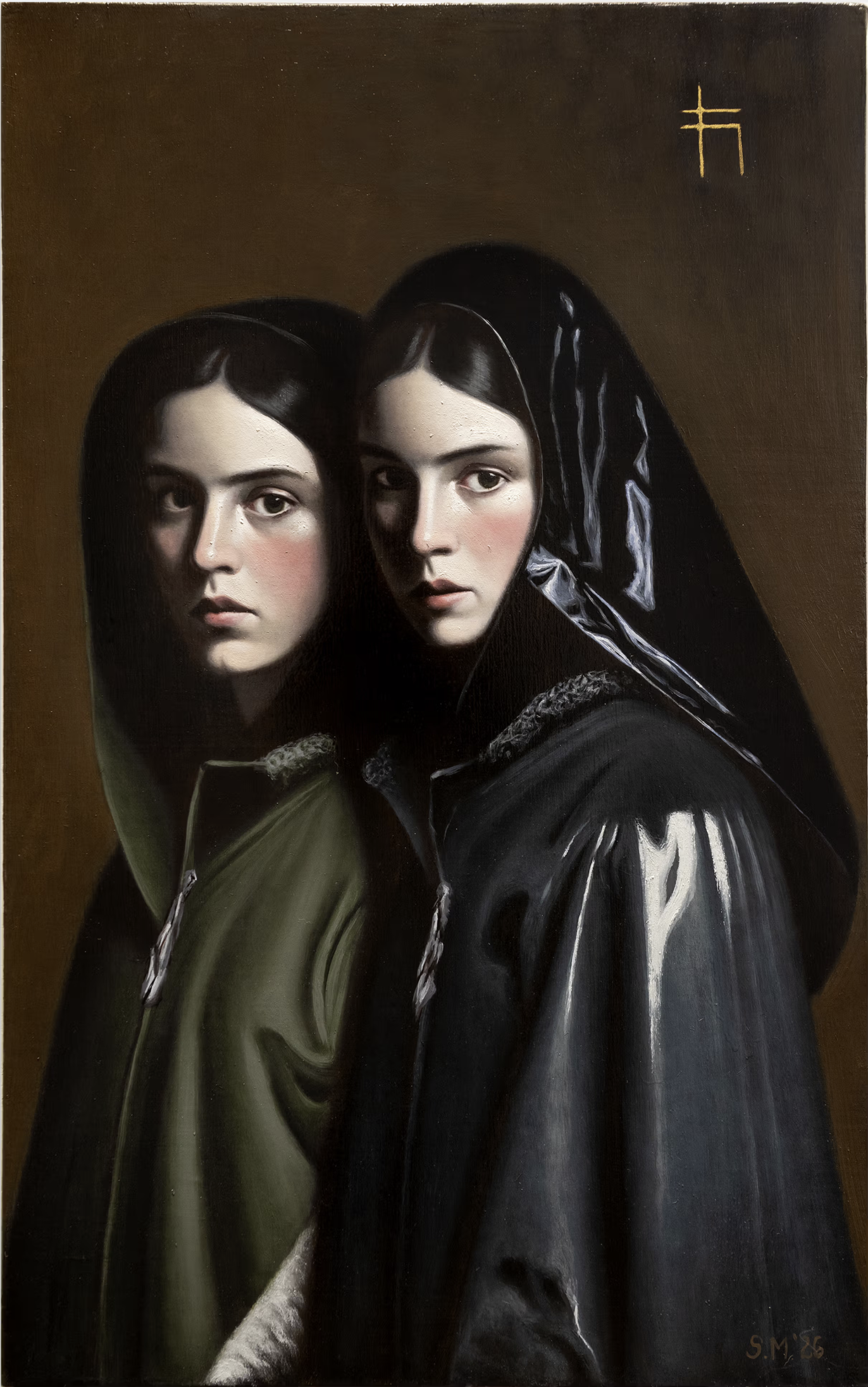
Sergio Miguel, Maria Sofia, 2025 | Company Gallery
I had a conversation with a sales director at Company Gallery, who featured an incredible booth of works by Sergio Miguel. Before I saw the work in person, I’d already heard about it. I asked the gallery why there was so much buzz, and they shared something that stuck with me. It’s becoming rarer to see painting that commits fully to the medium, and doesn’t flinch on composition or narrative, with a kind of discipline that feels rooted in old masters without cosplay-ing the past. It’s a nod to what was, without erasing it.
The presentation orbited a bullfight. Not just the bull, but the spectators too, charged with the stillness of watching. Work that makes you feel the psychology of the room as much as the scene itself.
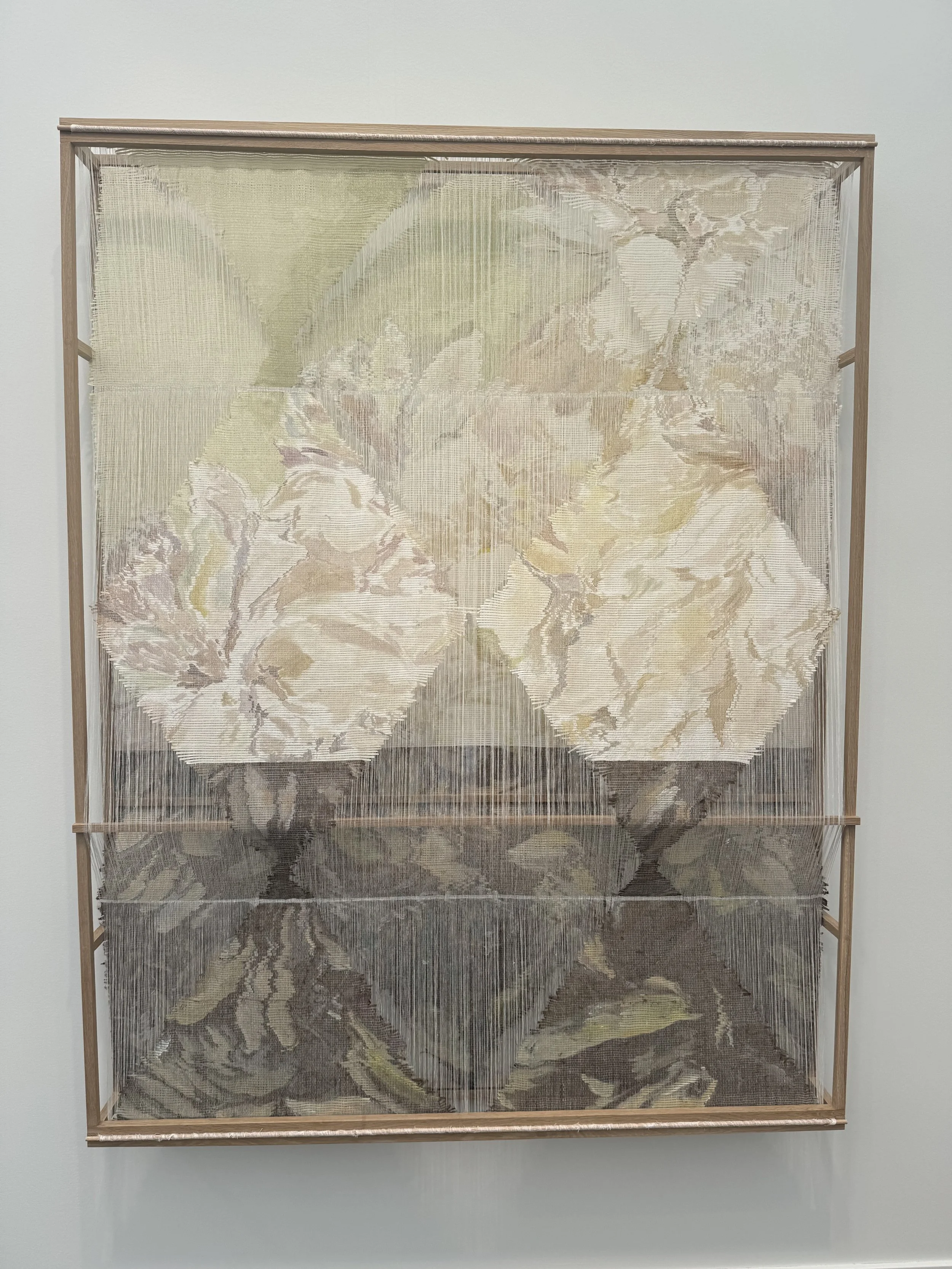
Elise Peroi, L’ocre du vent I-VI, 2025-2026 | Carvalho
Another favorite in this realm was Élise Peroi at the Carvalho booth. From a distance her textiles read like light, lacy, ethereal, almost too delicate to be real. Then you get close and realize how much labor and repetition is inside them. Each piece is a landscape, but it shifts and changes with a subtle breath. It’s the kind of work that makes you slow down because your eyes can’t skim it.
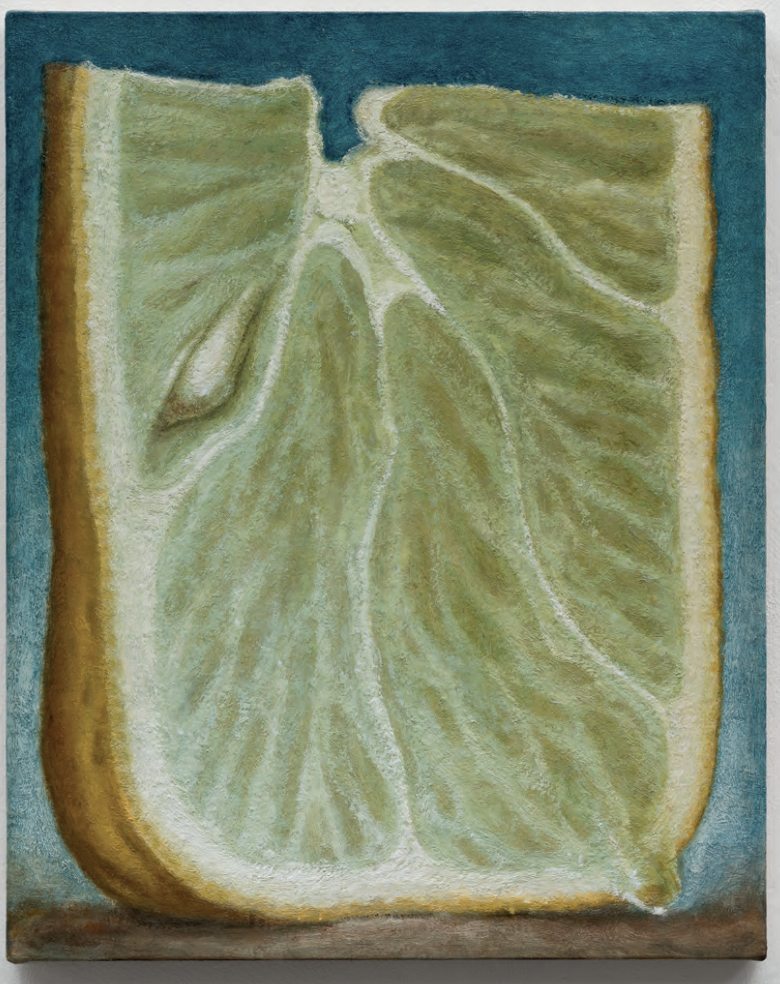
Edward Kay Sorrento, 2026 | Roland Ross
And then Edward Kay’s lemons at Post-Fair, presented by Roland Ross, which I’d flagged in my preview (link below), but seeing them as a series in person was the real reveal. Each piece is a single slice of lemon with tiny shifts: a stray seed, a bead of water, a change in light temperature. It sounds ridiculous to say a lemon slice can feel emotionally charged, but they were. They’re small paintings that demand big attention, and in an art week designed for speed, it felt like a small rebellion.
Containers edit culture
The last thread I can’t shake is how much the container shapes what art can be. LA Art Week isn’t just a set of objects, it’s a set of conditions. It also includes traversing the 10 freeway multiple times over. The journey and the venue determine whether you’re actually meeting the work, or just consuming it.
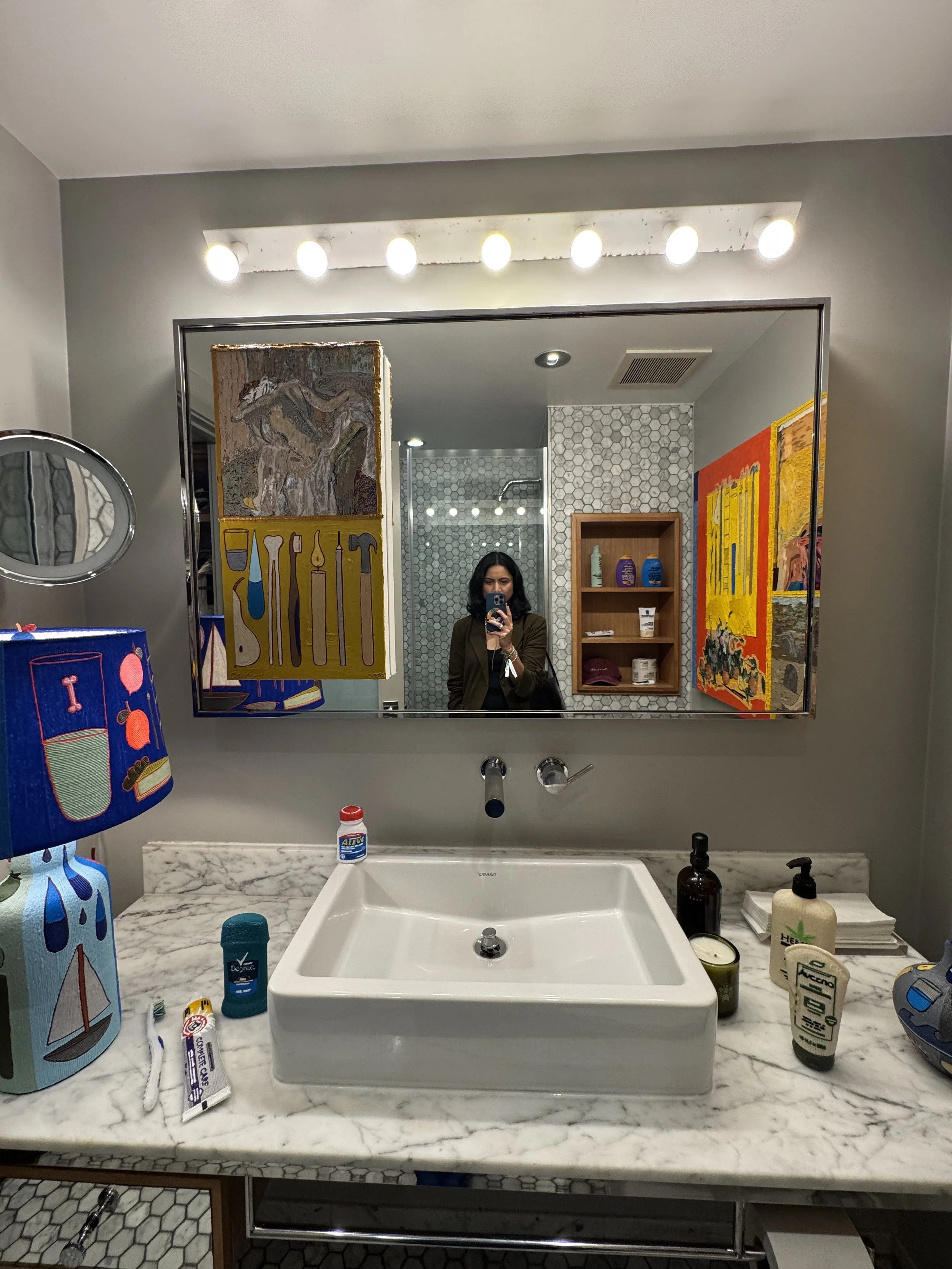
Charles Hickey’s takeover of art and objects at Feia’s booth at Felix
That’s what I’ve loved about Felix over the years. Housed in the Roosevelt Hotel rooms, you’re not in a vast tent scanning for hits like at Frieze. Instead, you’re stepping into small worlds one at a time. You can stand still without feeling like you’re blocking traffic. You can talk. You can let the work build on you. You can see it in the context of a room or a patio. And that changes everything, especially for the artists I was drawn to this week, where tactility and detail are the point.
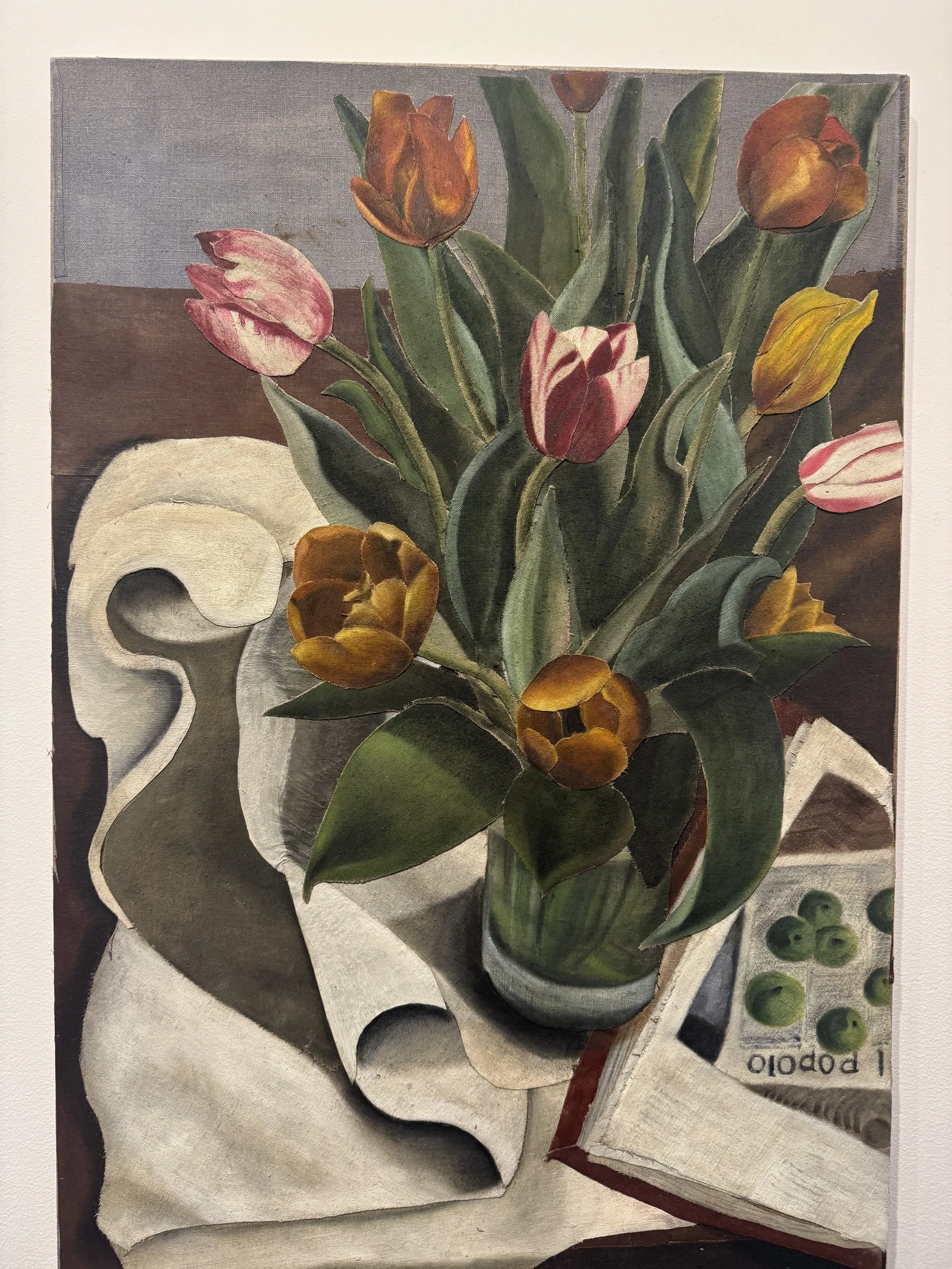
Alessandro Teoldi, Tulipani e Casorati, 2025 | Marinaro, Gianna Commito, Hessler, 2025 | Uffner & Liu
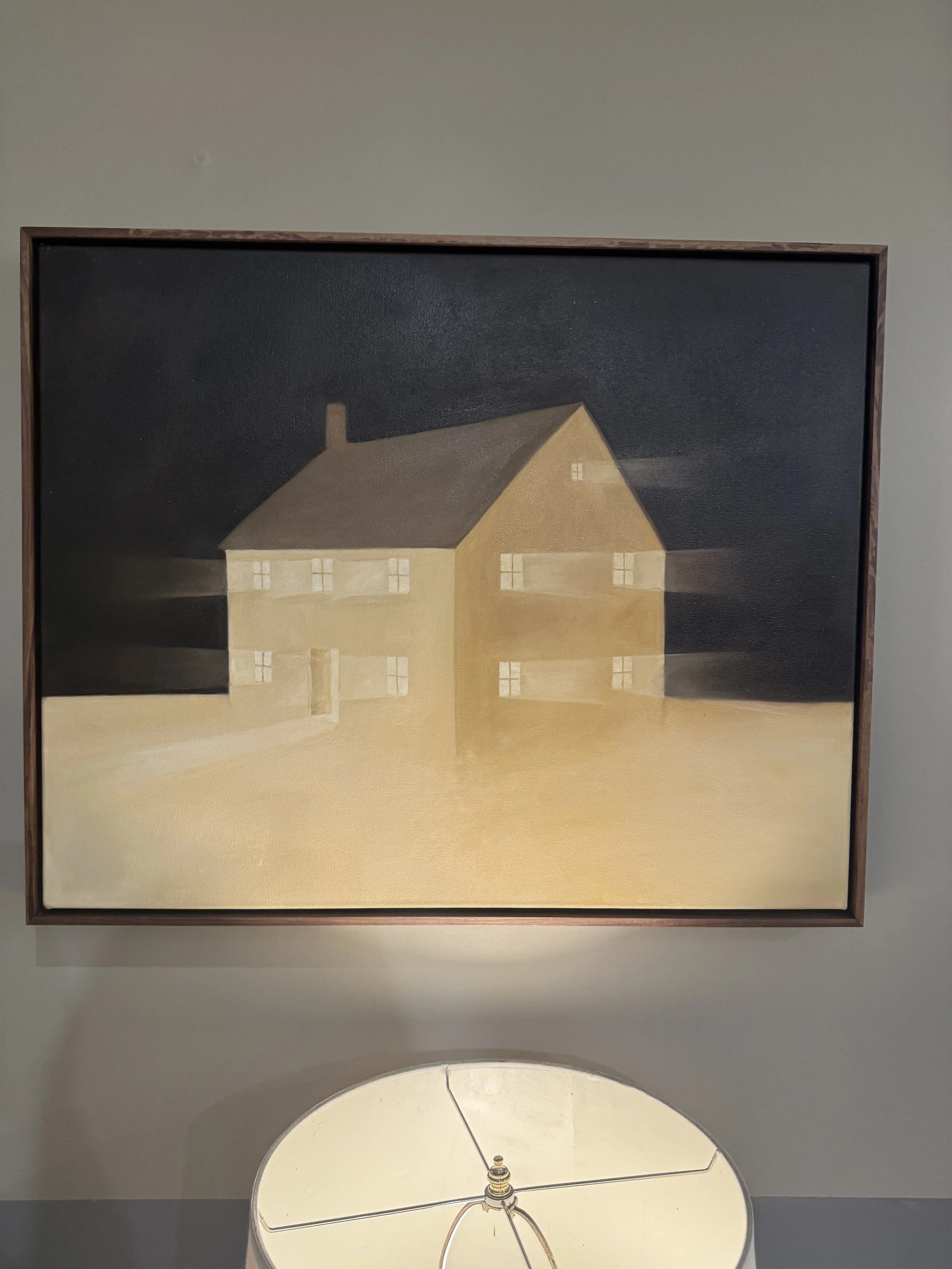
Losel Yauch, After All, 2025 | La Loma
At Felix, I loved Charles Hickey, Alessandro Teoldi, Gianna Commito, and Losel Yauch, but the bigger point for me was the pace the rooms force on you.
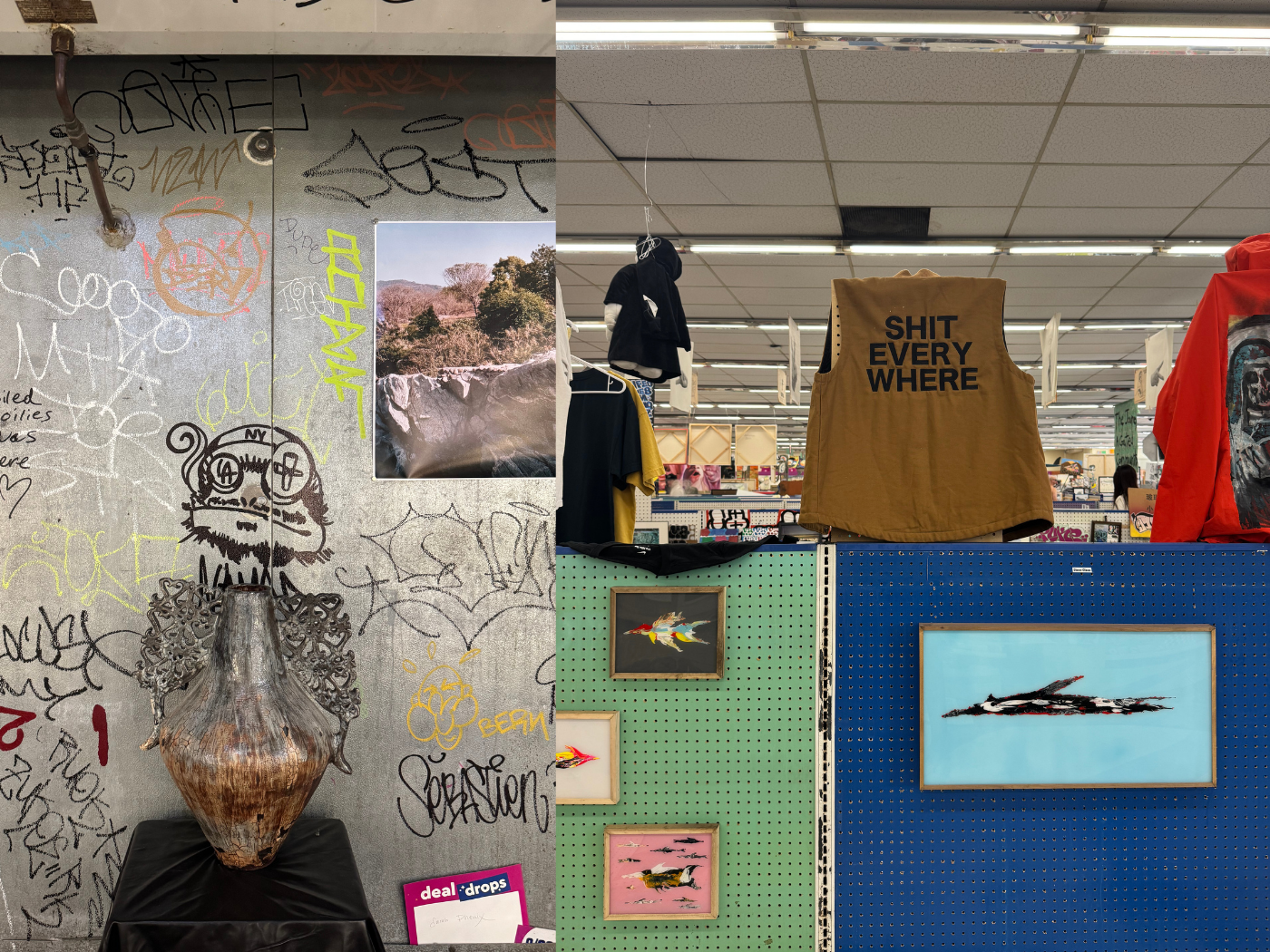
A boarded up 99¢ store near LACMA that was converted into an artists market by The Hold and artist Barry McGee; L: Art displayed in the storage of the grab and go fridges, R: Art literally EVERYWHERE in the aisles
The 99CENT exhibit sat at the other end of that spectrum, interesting less for what it showed than for what it asked. Who gets to show? What spaces “count”? What happens when you swap the white cube for fluorescent light and a storefront people actually recognize from real life? I loved the premise, and I loved the permission structure it hinted at. If I’m being honest, most of the art didn’t hold me for long. The container was doing cultural work anyway.
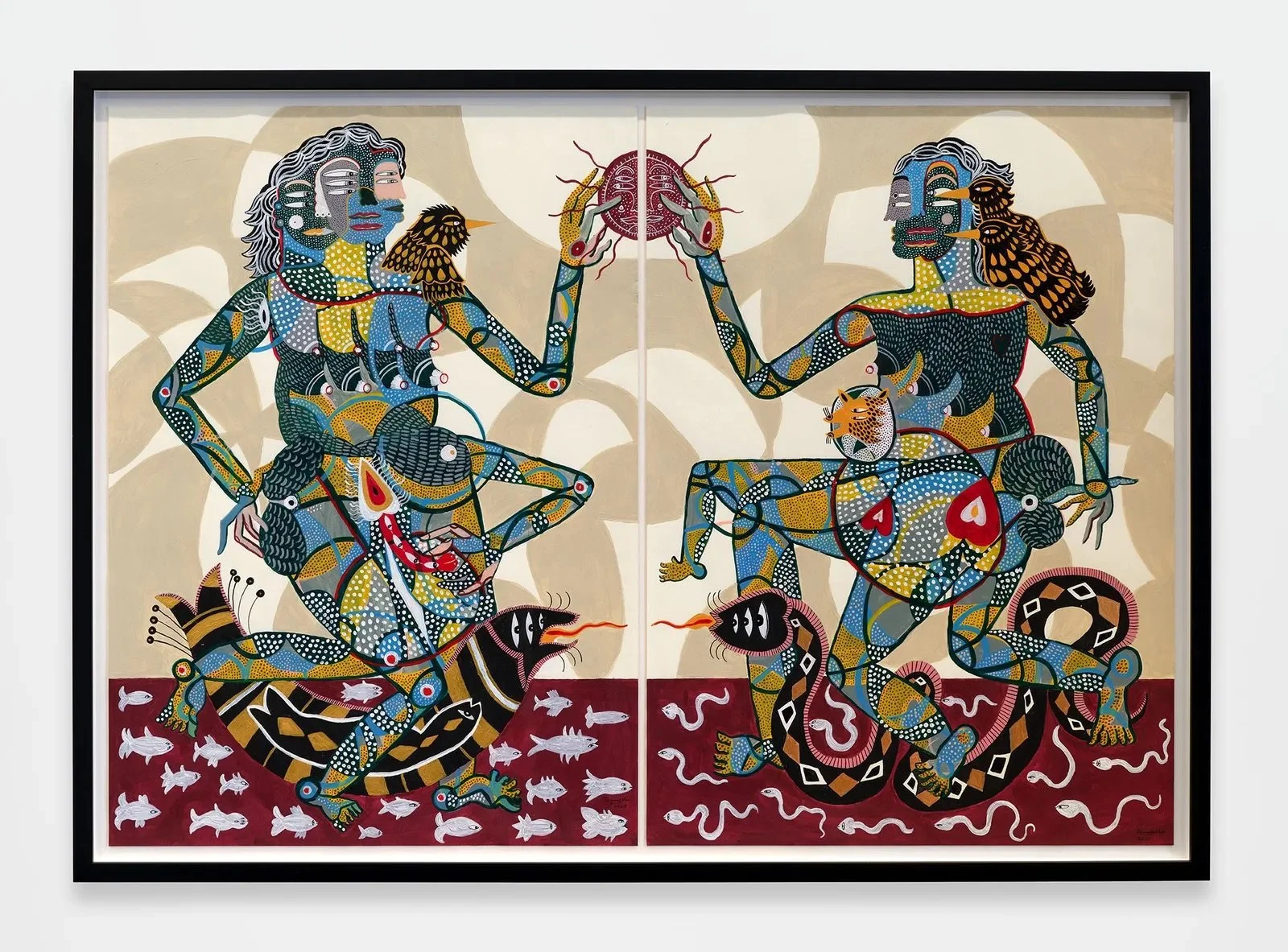
Tarini Sethi, Swimming at Sunrise, 2025 | Rajiv Menon Contemporary
And then the week’s real exhale, a regular gallery opening at Rajiv Menon Contemporary that was anything but ordinary. I’d seen both Tarini Sethi and Sahana Ramakrishnan’s works on my screen before, but in person you finally get the reward their work is built for, the little easter eggs, the details they pack into every inch, the way scale changes the entire story. It’s one thing to “like” an image online. It’s another to stand in front of it long enough to realize how much is actually happening.
That’s what a good container does. It gives complexity room to register. It lets the work slow you down.
That’s what ties the three threads together for me: memory, the hand, the container. The work that stays isn’t always the loudest. It’s the work that gets the right conditions to actually reach you.
Market notes
Art week recaps tend to swing between two modes, pure feeling or pure sales. The truth is it’s always both. I lead with what moved me, but for anyone who likes a signal of what the market rewarded in real time, here are a few reported notes from the works and artists mentioned above:
Njideka Akunyili Crosby, Grandmother’s Parlour reportedly sold for $2.8M to a European foundation, the highest reported Frieze sale.
Sergio Miguel (Company) was reportedly close to sold through by Friday, when I visited only a couple works remained.
Élise Peroi (Carvalho) reportedly sold out, with works reported around $9,500–$48,000.
Howardena Pindell (Garth Greenan) reportedly sold a painting for $875K.
Kour Pour (Olney Gleason) reportedly sold works in the $22,000–$65,000 range.
Charles Hickey (Feia / Felix) reportedly sold out on day one at Felix.