How Honey Pierre turns rest into something you can feel in your body
You know how someone’s face changes the more time you spend with them. There’s the first look that pulls you in, and then you start to notice the little details—how a half smile softens and warms their face before it fully arrives, how their eyes light up when they talk about something they’re proud of, how you fall in love with them a little bit more.
That’s what spending time with Honey and her art have felt like.
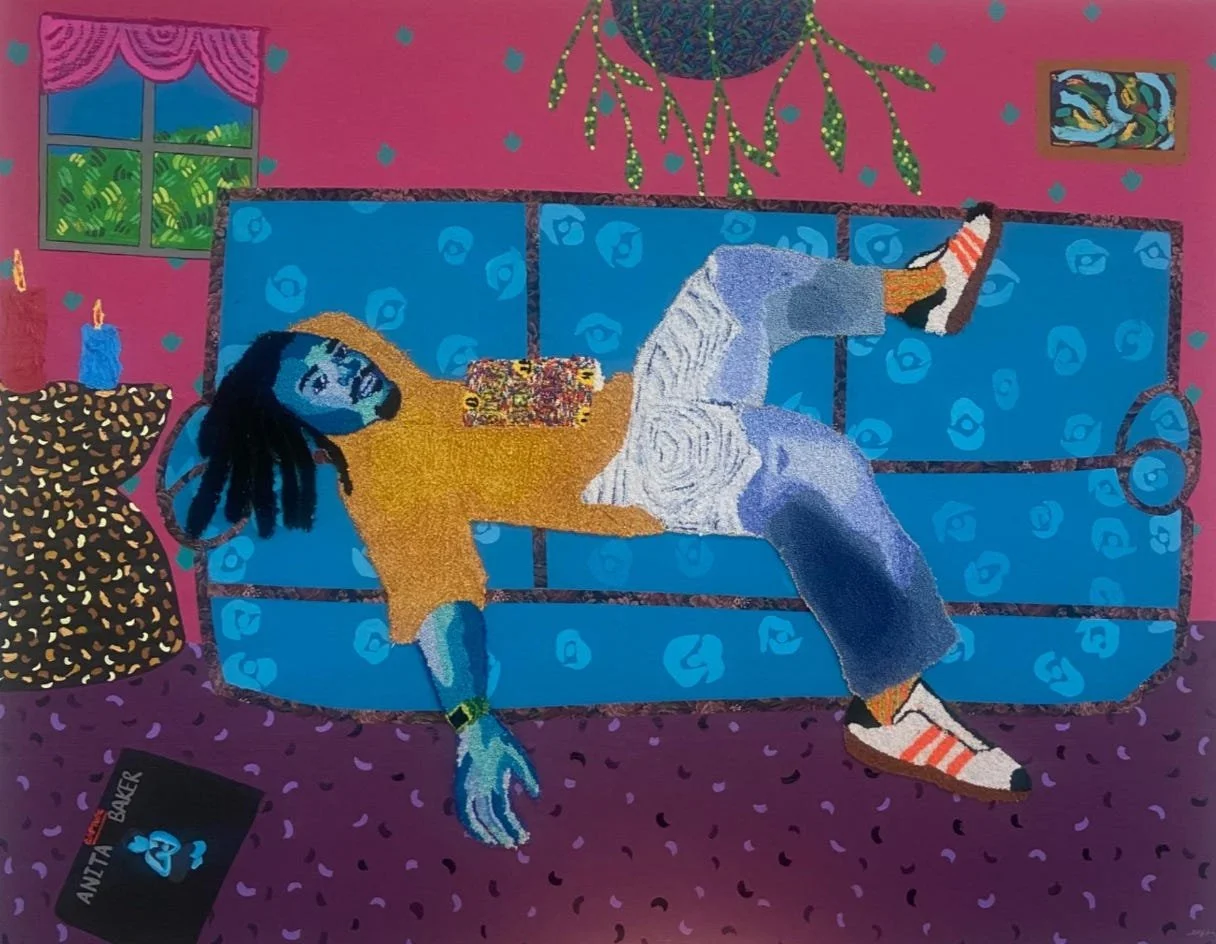
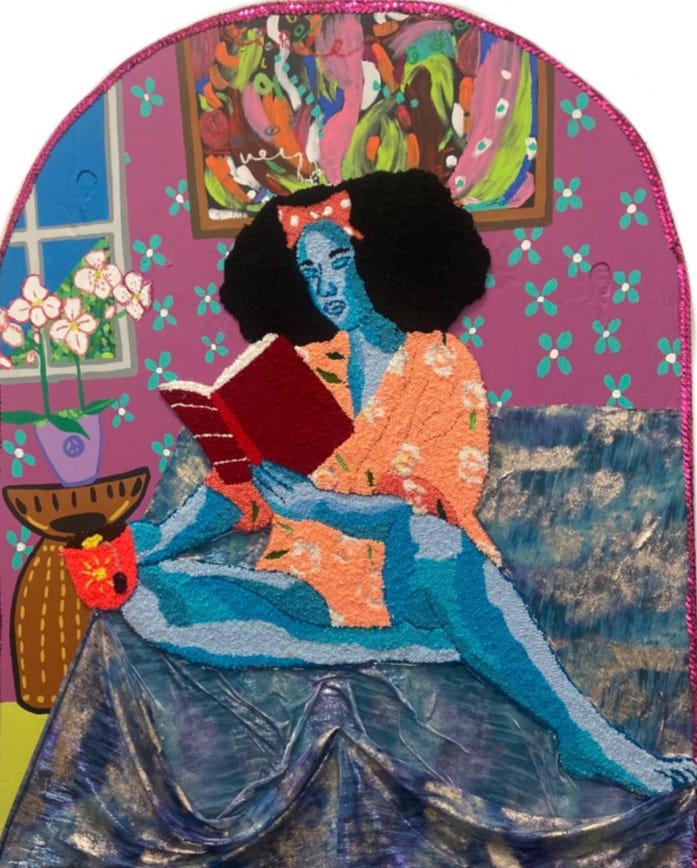
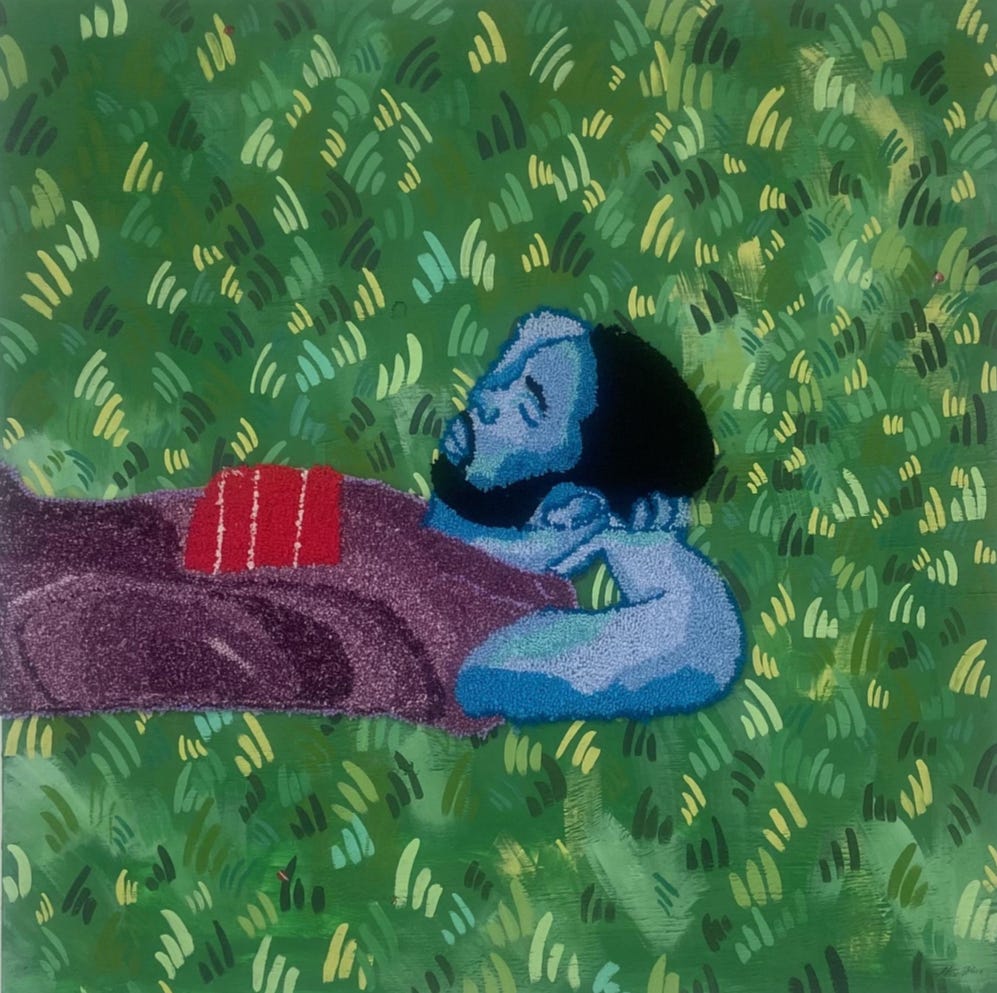
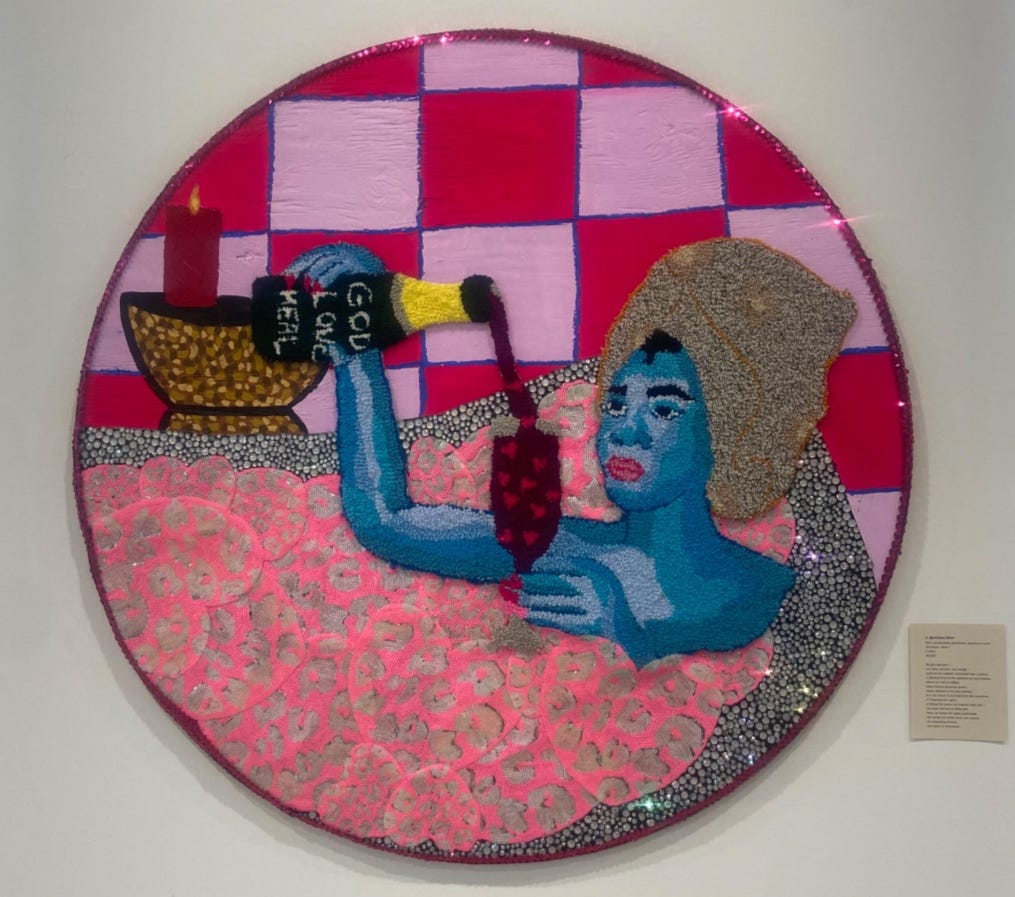
Honey Pierre’s work feels like cozy spaces you want to move into . Pierre’s blue-bodied figures were stretched out on couches and soft grass, reading, daydreaming, pouring wine into a bath. The scenes are domestic and everyday, but the textures buzz: punch-needled yarn, painted pattern, glittering sequins, all holding a charge that you can’t take your eye off of.
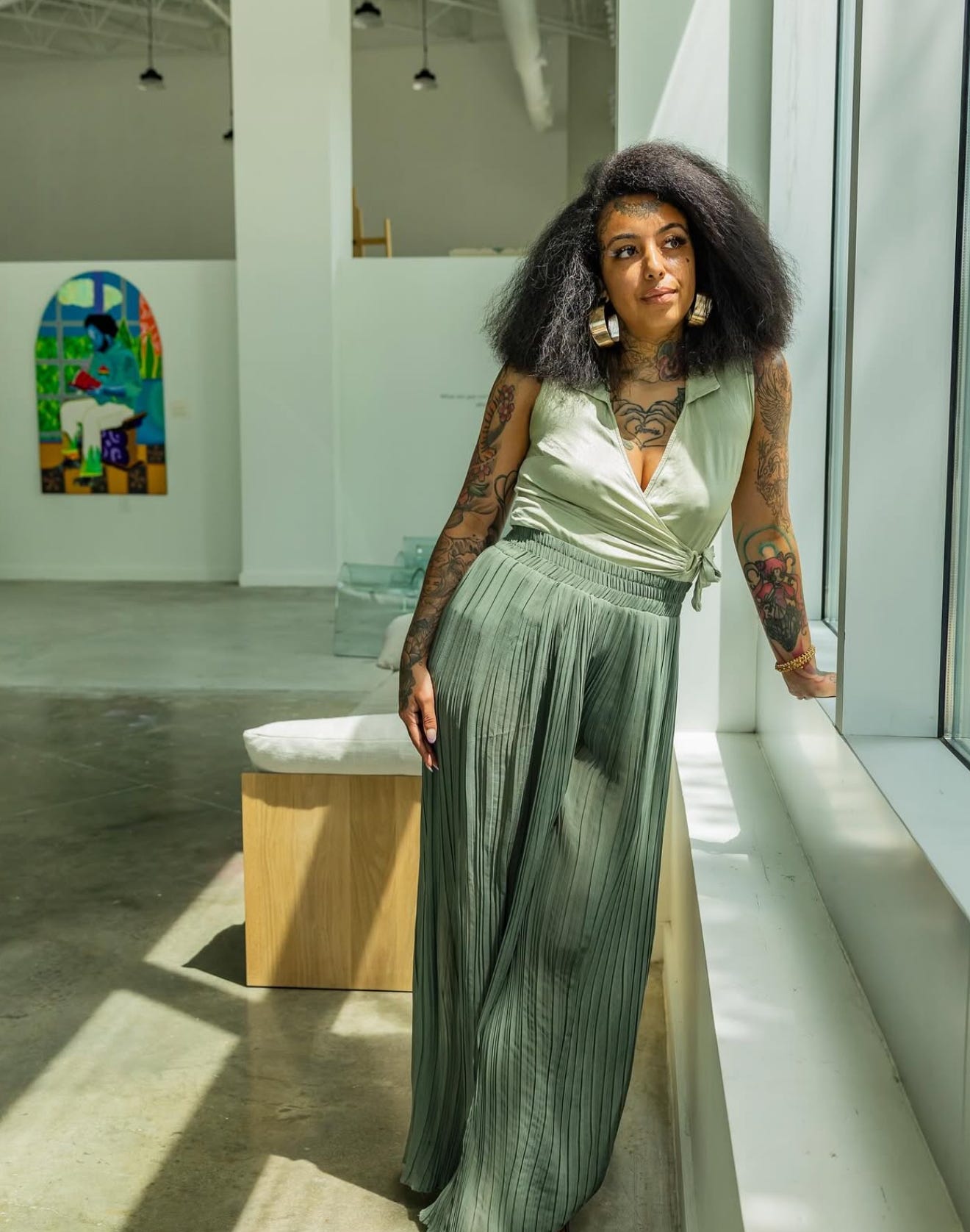
Based in Atlanta, Pierre came to art through a route that runs from the Army to tattooing to piercing before landing in textiles during the early months of the pandemic. Since then she’s built what she calls her “blue universe”—intimate portraits and tableaus that hold stillness, joy, and vulnerability for Black figures who are often denied all three.
Her recent body of work, I’m Just Living Some Life, Okay?, marks five years in the medium and has opened up a deeper, more embodied connection with viewers. The series grew out of those first pandemic years, when she and her friends were in their twenties feeling like that whole chapter of life was being taken away. They kept repeating a little refrain to each other: “I’m just trying to live my life.” When it came time to title the exhibition, she realized that phrase held the reality of the last five years for all of them: the shifts, the confusion, the healing, the growing up. Naming the show after it felt honest, timely, and a reclamation of what was lost and what was to come.
We spoke about the transfers from body work to fiber, how she uses blue as both atmosphere and emotion, and what it means to keep giving back while protecting your own practice.
On the journey: from Army to tattoos to textiles
You’ve moved through so many worlds—Army, tattooing, piercing—before landing in textiles and fine art. How do you connect them now?
Toward the end of my time in the Army, I had a few months to really sit with what I wanted next. I knew I could take a job just to have a job, or I could try to build a life around something I actually loved. Art has always been that thing for me.
In the military, I was surrounded by tattoos and tattoo artists. That environment pulled me in—I got an apprenticeship when I got out, and that’s really where I learned to draw. I was studying anatomy, line, and how to slow down enough to let ideas evolve. It wasn’t “fine art” in a traditional sense, but it was my first real art training.
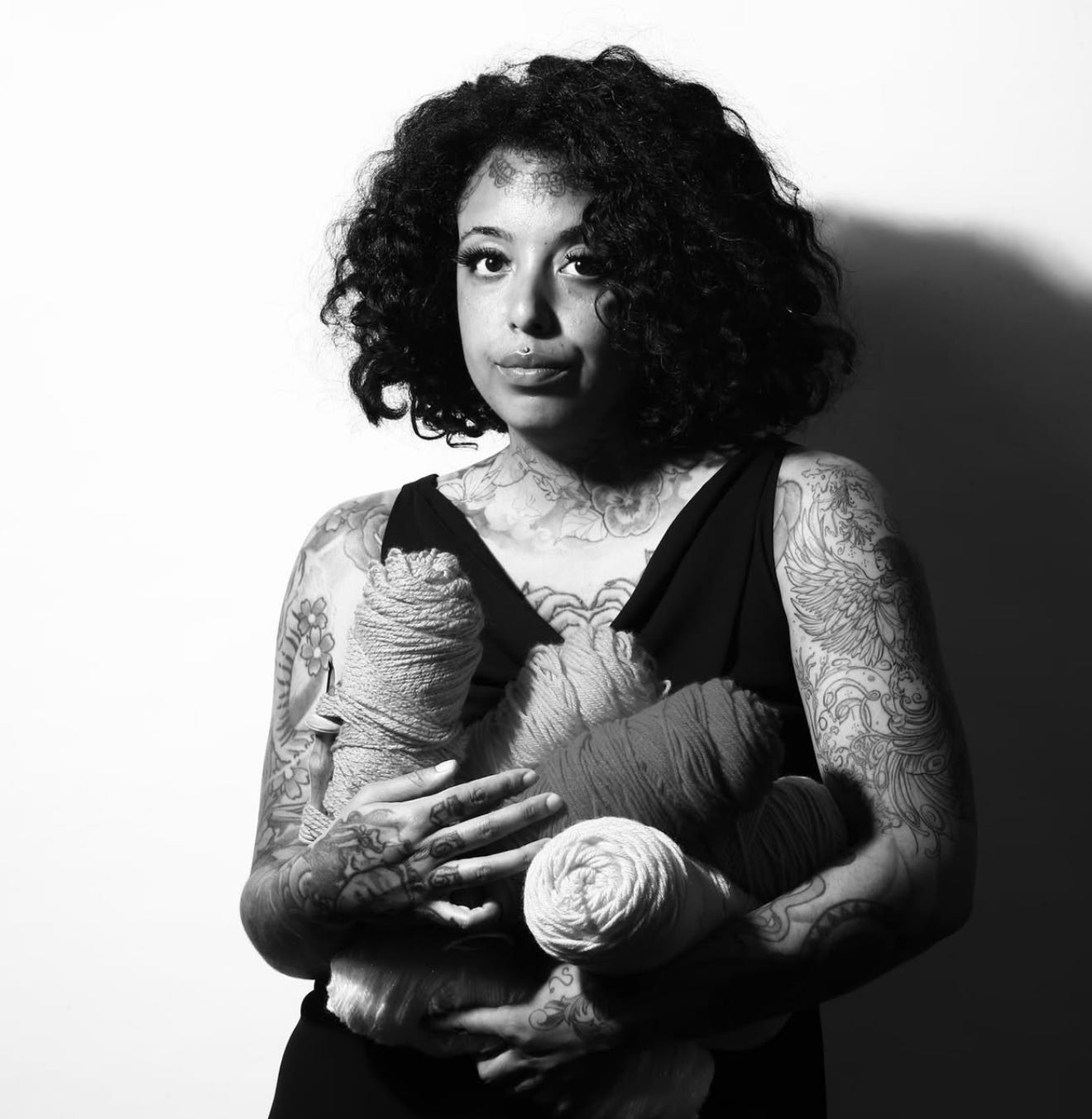
Piercing came after that. It gave me a steady income while keeping me in a creative environment without going back into a rigid job. Then the pandemic hit. Everything stopped, and that pause is when I found textiles. Working with fiber gave me space to slow down and connect with materials in a way that felt honest and grounding. I fell in love with it. By 2022, I left piercing completely to focus on my art full-time.
The throughline between all those worlds is precision, patience, and care. Those are things I learned both in the military and working with people’s bodies. And there’s also the needle itself—it’s a small tool, but it’s central to everything I do now. My punch needle lets me literally pull stories through the fabric.
When the work starts changing people’s breathing
When did you first notice that your portraits were shifting how people felt physically—not just what they thought?
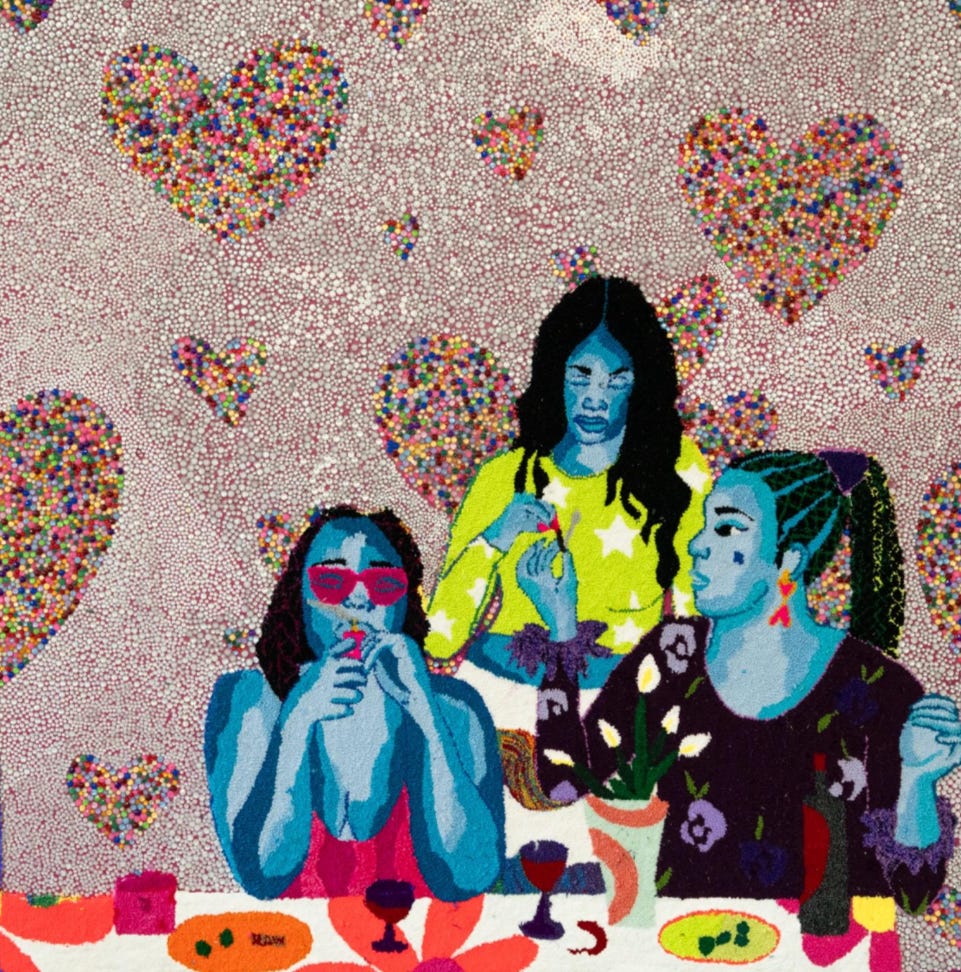
I really started noticing that change this year, with my body of work I’m Just Living Some Life, Okay? After five years of working in this medium, the response felt different. People were having more emotional, honest reactions. They were slowing down.
That series feels more vulnerable because it isn’t just about me anymore. I opened myself up to really getting to know people, where they were mentally and emotionally, and I let their lives become part of the narrative. Instead of only pulling from my own experiences, I made the process more community-based. I asked people to open up, to have real conversations, and to share what they’d been carrying.
It reminded me that art doesn’t always have to perform. Sometimes it just has to hold space.
Doing that created a different level of vulnerability, because now I’m holding not just my story, but pieces of theirs. Through those dialogues, I started to understand what it means to gather communal feelings and experiences and translate them into the work. Even the still lifes are about shared humanity—healing, reflection, and just being. It reminded me that art doesn’t always have to perform. Sometimes it just has to hold space.
Inside the “blue universe”
Your figures live in this blue universe that feels more like vastness than melancholy. How do you think about light and value on blue skin?
Blue has become one of my closest companions in the work. It definitely carries calm, but there’s a little melancholy in there too—just like people.
When I’m punch-needling skin, I start the same way a painter would: by mapping values. I’ll use markers to block in the light and shadows first, because a face naturally has multiple tones depending on where the light hits. Then I layer yarn with different blues, and sometimes I’ll sneak in warmer notes—soft oranges or neutrals—to balance it out.
I always work from reference photos, but once I’m into the fiber, intuition takes over. I’m not trying to mimic real-life skin; I’m building atmosphere and emotion. Even if the palette changed, I’d still be thinking about contrast, value, and how the body holds light. I’d still want the figure to feel like a world you can enter—not just an outline of a person.
Writing as the first step
You’ve said you start your process by writing. What does that look like?
I usually begin by asking myself what I’m actually saying. Is this a body of work, a series, or a singular piece? What’s the message behind it—if there is one?
Most of my figurative work carries a narrative. It’s about people, emotions, and environments. So I want the composition, the colors, every decision to align with that story. As I write, the image slowly comes into focus. By the end of that first round of writing, the portrait is in the room with me; the image and the language are in conversation.
When I finally start working, I’m checking that the energy in the piece—the colors, the pose, the background—matches what I was feeling and writing at the very beginning.
How fiber and paint talk to each other
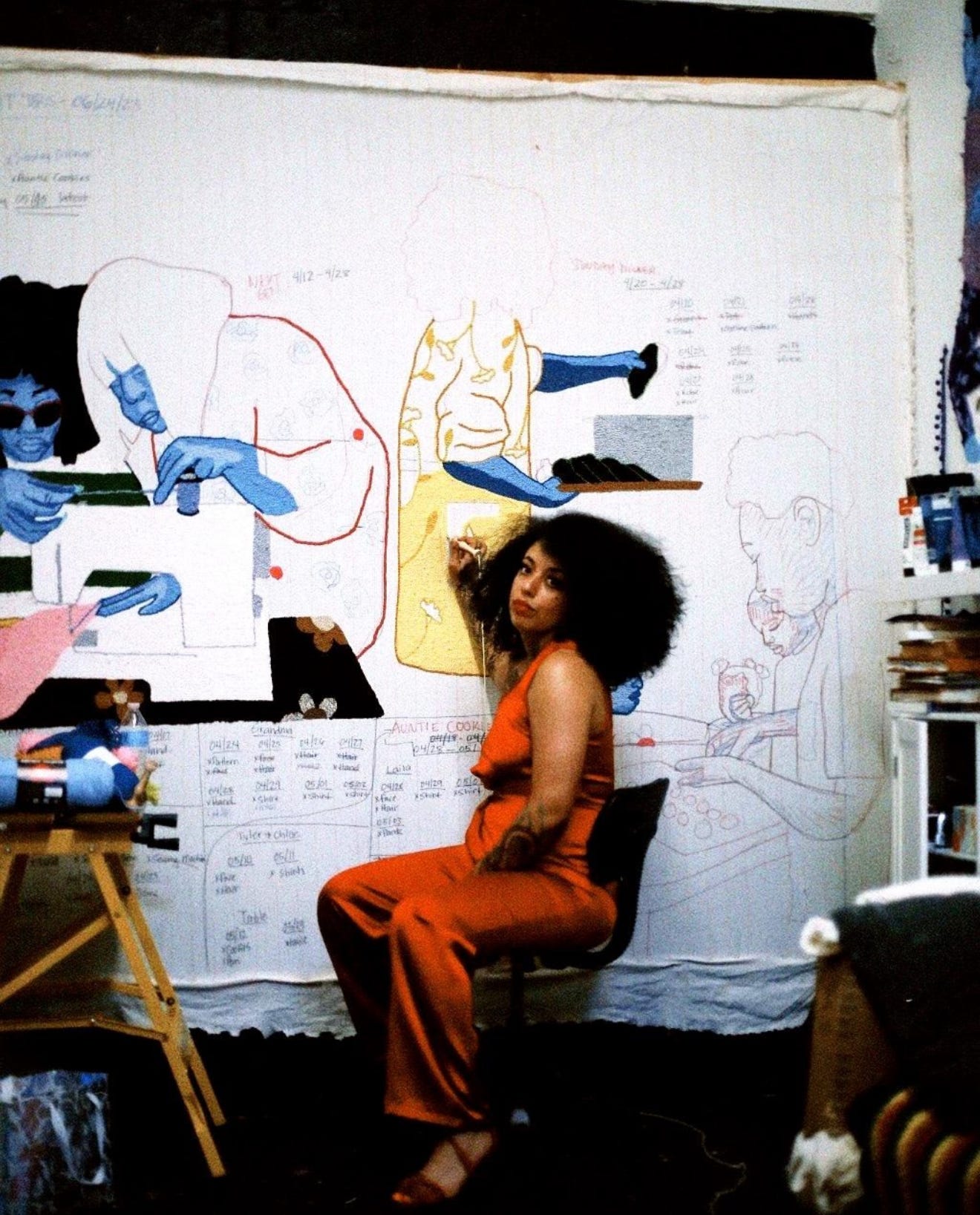
Once the story is clear on the page, you start to build it in fiber. How do you move between punch-needled fiber and paint? What’s your process for integrating them?
Fiber always comes first for me. That’s where the figure lives, and I want to make sure they’re doing everything they need to do before I add anything else. Once the figure is solid, I move into paint and start thinking about how it can support the fiber instead of fighting with it.
The goal is harmony—so your eye doesn’t have to choose between fiber and paint, it moves through them.
From there it’s a balance between intuition and structure. I’m letting both mediums guide the rhythm of the piece. The goal is harmony—so your eye doesn’t have to choose between fiber and paint, it moves through them.
Plants, patterns, and the symbols that keep showing up
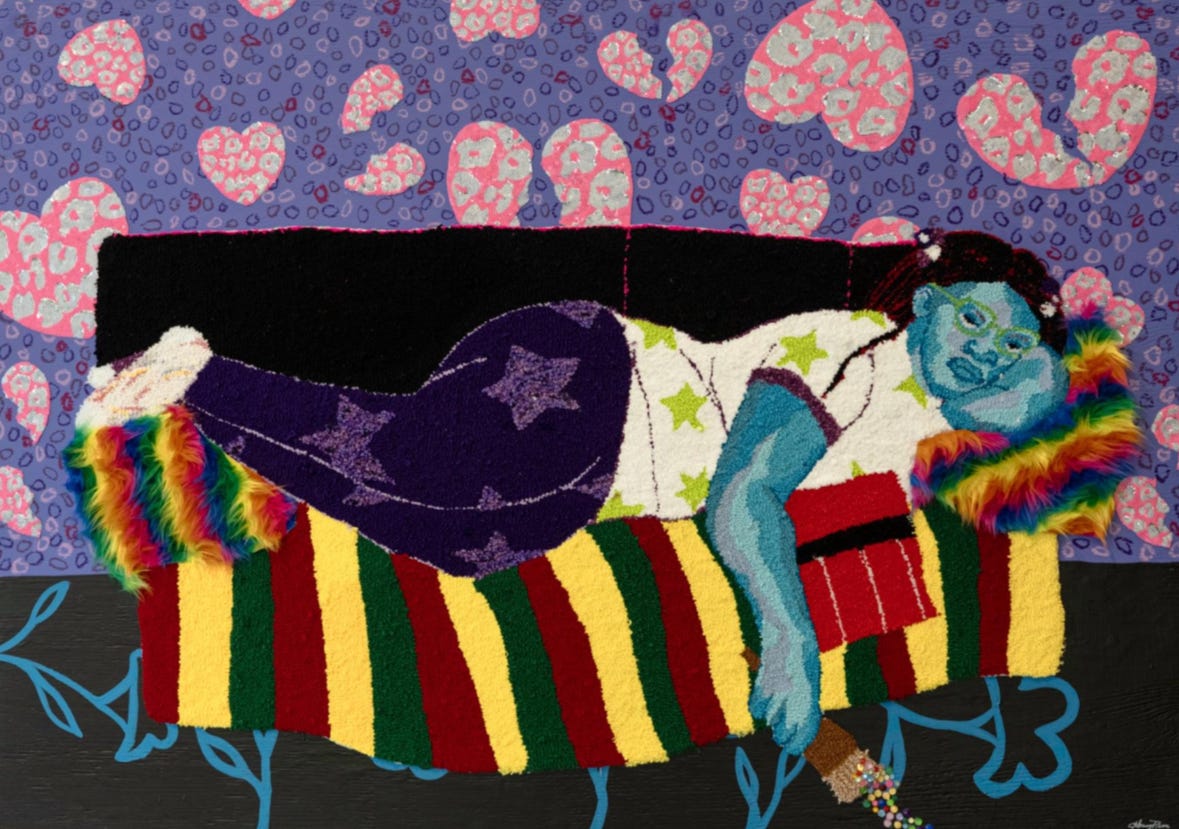
Rest is central in your work, but it never feels passive. What keeps those images breathing for you?
Rest, for me, is active. It’s a choice. When I’m composing figures who are lounging or lying down, I think about where energy still sits in the body—maybe a hand is holding a book, or the eyes are still alert even if the body is relaxed. There’s always a pulse.
Color and pattern do a lot of that work too. Even in a quiet scene, the prints, the plants, the textures all keep the image moving.
The plants become quiet biographical markers, reminders of where I come from and the environments that shaped me.
Plants show up often—on tables, in windows, patterned through the background. Which ones are biographical for you?
I grew up around gardens. My mom was a florist, so plants have always been in my life and my memories. There’s something grounding about that.
Bamboo shows up a lot in my work—it’s a symbol of resilience and growth. I also love snake plants. They’re such a common houseplant; a lot of people have them at home, so they’re instantly familiar. And then there are vases of flowers arranged in ways that feel like care and memory. The plants become quiet biographical markers, reminders of where I come from and the environments that shaped me.
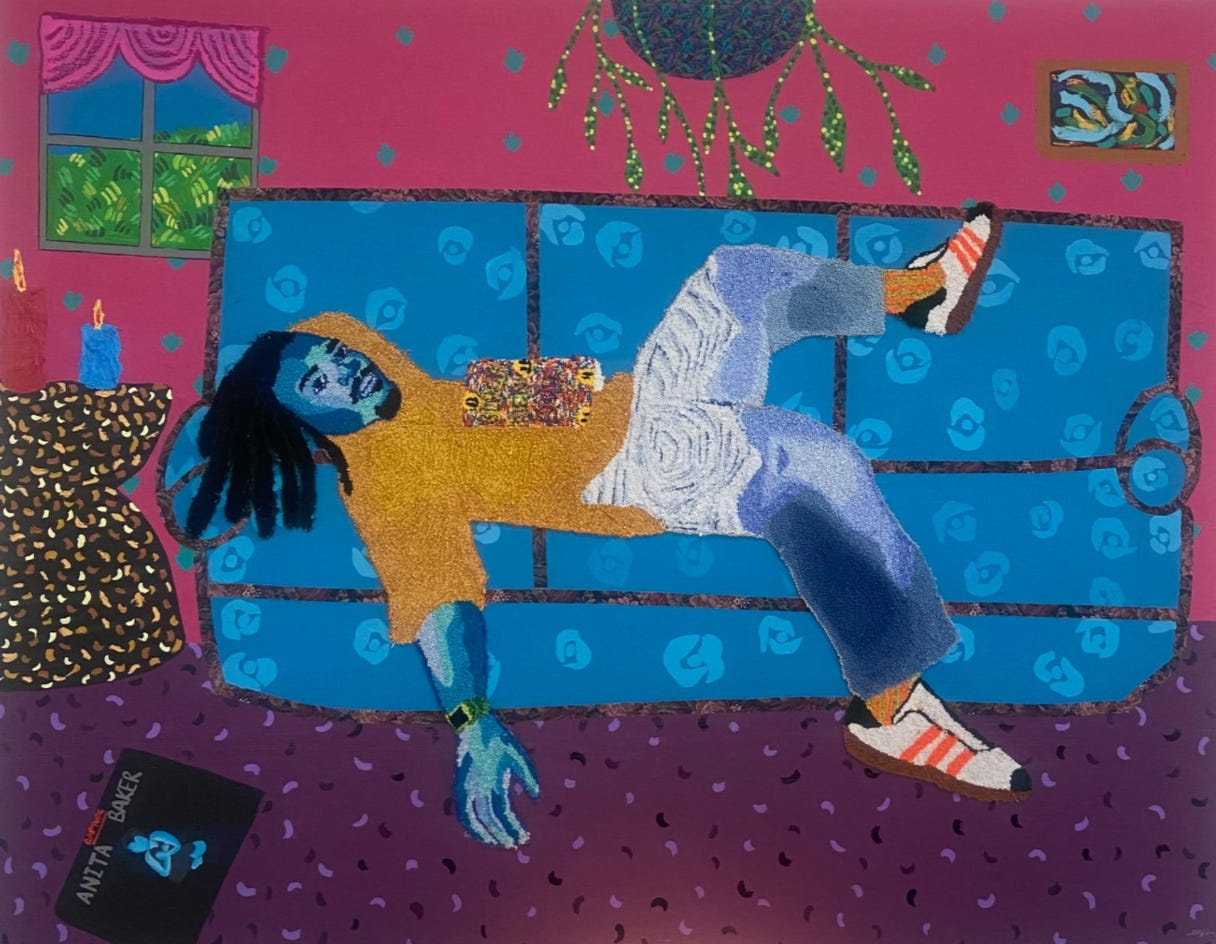
What other symbols are you carrying through the work?
Floral patterns are a big one. You’ll see them in backgrounds, in clothing, everywhere. They’ve become part of my visual language—something people recognize as “me.”
The flowers hold grace and beauty, but they’re also about resilience and softness coexisting. They add rhythm and familiarity, creating balance between the figures and their worlds.
Practice design: giving back without burning out
You talk about mentorship and community labor. How do you keep giving back sustainable?
Right now I give back mainly through panels and school visits. I try to visit schools three or four times a year and share both energy and information with young people. I also say yes to community projects where I’m genuinely needed and where the timing works with my practice.
In terms of mentorship, I don’t feel quite ready to take someone on formally yet. I want to be at a point where I can really hold that responsibility. But I’m excited for that chapter—supporting another artist and helping them move toward their purpose.
What’s next
What problem or question are you wrestling with right now?
The big one is finding residencies and fellowships that truly align with my practice and vision. At the same time, I’m figuring out new ways to secure funding in a climate where certain voices and perspectives are under more scrutiny. It’s a lot of navigating the landscape while staying honest with myself and the work.
Dream collaborations—who’s on the list, and what would you want to make together?
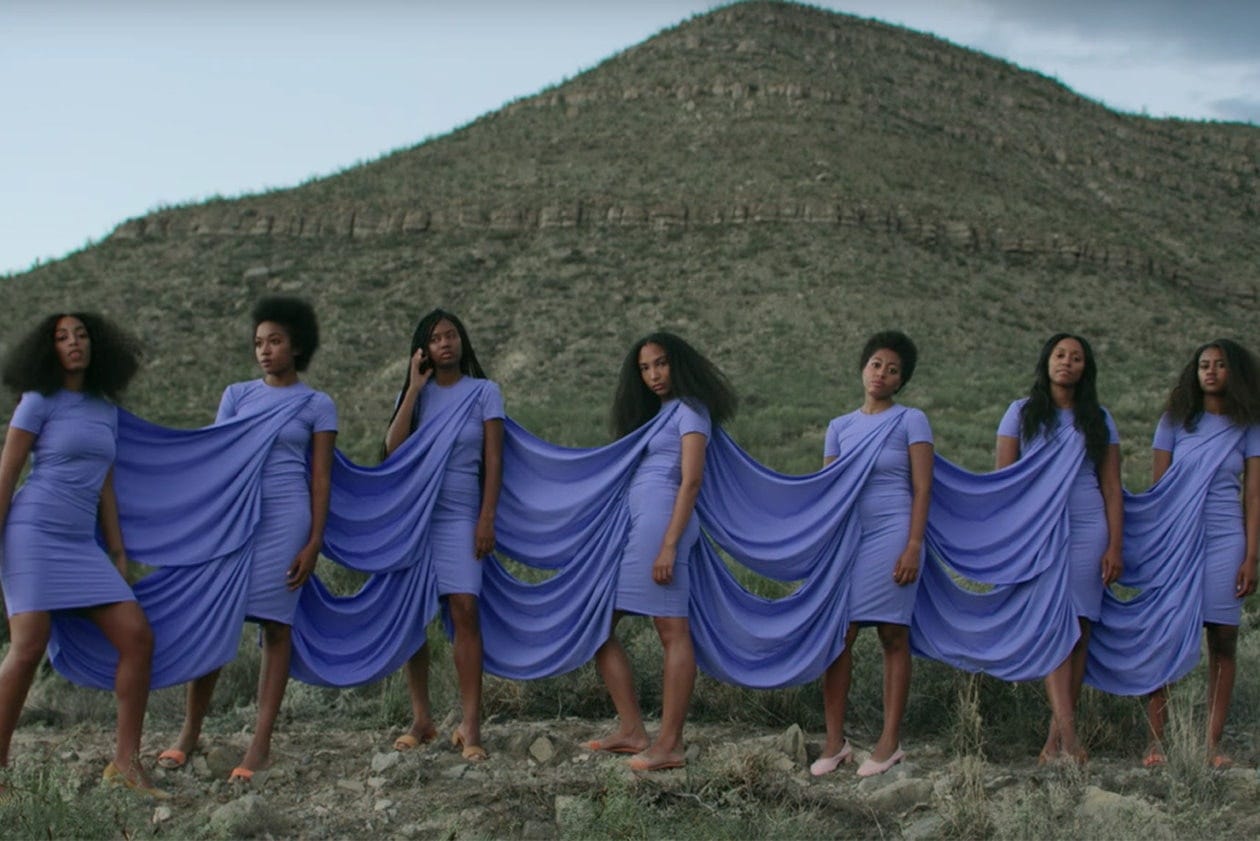
If I were collaborating with a musician or filmmaker, I’d choose Solange. I’d love to create a series and a film exploring African spirituality. I think our backgrounds would let us build something really layered and intentional together.
For a brand, I’d choose Adidas. They’re open to thinking outside the box with materials, which lines up with how I approach textiles. I feel like we could make something that feels both natural and genuinely new.
LOTA Fast Three
A color you can’t quit—and what it does in your work
Tangerine orange. Even though my work is already colorful, that hit of orange instantly brightens a piece. It carries energy and happiness. And because orange and blue are complementary, I’m always thinking about their balance on the color wheel.
One non-art object you keep in the studio
My blanket. I like to stay warm while I work, and it’s comforting to have it nearby. When I’m overthinking or getting too in my head, wrapping up in it helps me chill out.
An artist who keeps you company
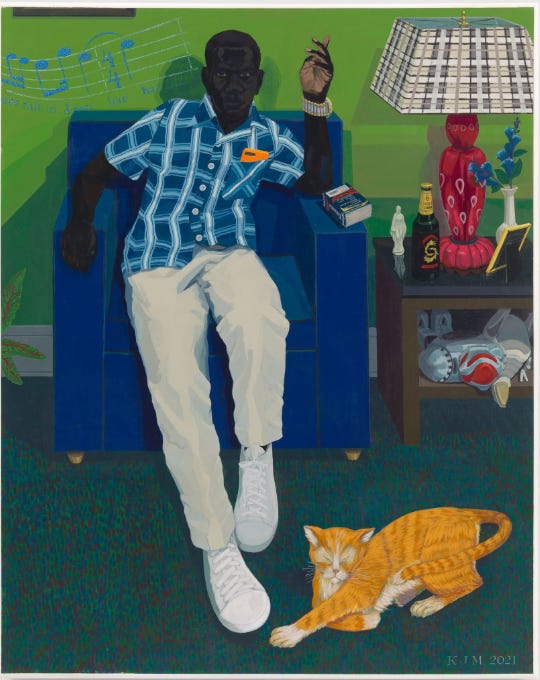
Kerry James Marshall. His work shows me how thoughtful and playful you can be while exploring humanity, autonomy, and identity. I’m especially inspired by how he considers scale and space, and how landscapes frame his narratives. It pushes me to think about how my own figures live inside their environments.
Photos courtesy of artist unless otherwise noted
If you’d like to learn more about available works, reach out and we can connect you. You can also follow Honey on Instagram at @honeypierre_and see her work in person at GPGallery in Harlem from December 13–January 24 (linked below).